

Keywords
Autoimmune disease
Chimeric antigen receptor-engineered regulatory T cell
CAR- Treg
Chimeric autoantibody receptor T
CAAR-T
Immunotherapy
Antigen specificity
Next-generation therapeutics
How to Cite
Abstract
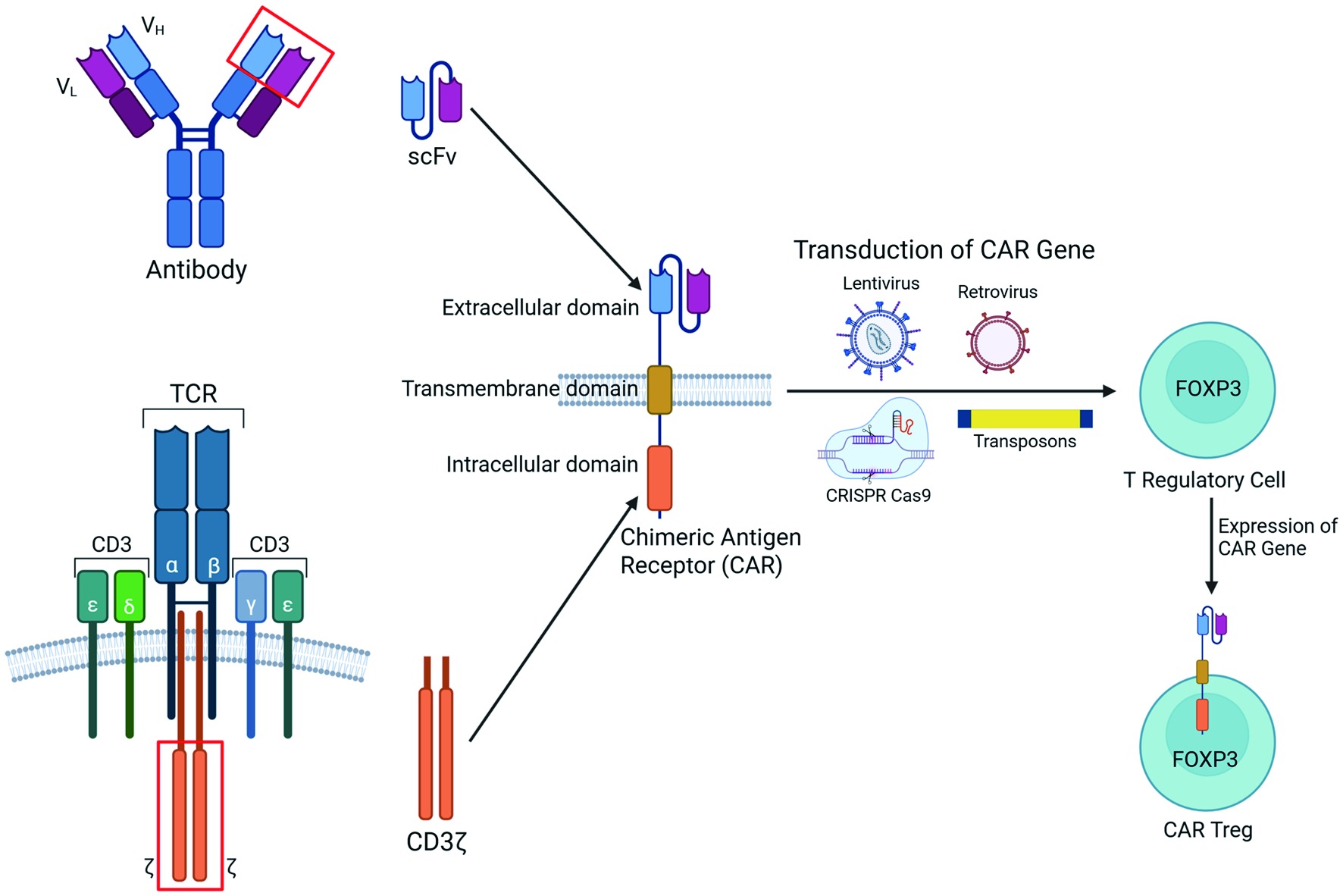
Chimeric antigen receptor (CAR)-engineered regulatory T cells (Tregs) have emerged as a groundbreaking advancement in the field of autoimmune disease therapy. By combining the immunosuppressive functions of Tregs with the antigen specificity of CAR technology, CAR-Tregs present a novel strategy to re-establish immune tolerance in an antigen-directed manner. This innovative approach offers a highly targeted and durable alternative to conventional immunosuppressive treatments, which are often limited by systemic toxicity and a lack of long-term efficacy. Preclinical studies in murine models of autoimmune diseases, including multiple sclerosis and type 1 diabetes, have demonstrated the therapeutic potential of CAR-Tregs to achieve localized immune modulation with minimal off-target effects. The suppressive activity of CAR-Tregs is mediated through a multifaceted mechanism involving interleukin-10 and transforming growth factor-beta secretion, cytotoxic-T lymphocyte associated protein 4 engagement, and adenosine production. Despite their remarkable advantages, CAR-Tregs face several challenges, including complexities in manufacturing, difficulty in antigen selection for multifaceted diseases, and potential loss of function over time. This review highlights recent progress in CAR-Treg research, positioning them as a next-generation, precision immunotherapy with the potential to redefine the treatment paradigm for autoimmune disorders. We further summarize the current challenges and advancements in CAR-Treg therapy, followed by a discussion of its future prospects.

This work is licensed under a Creative Commons Attribution-NonCommercial-NoDerivatives 4.0 International License.
Copyright (c) 2025 Nature Cell and Science