

Keywords
T lymphocytes
PD-1
PD-L1
CTLA-4
How to Cite
Abstract
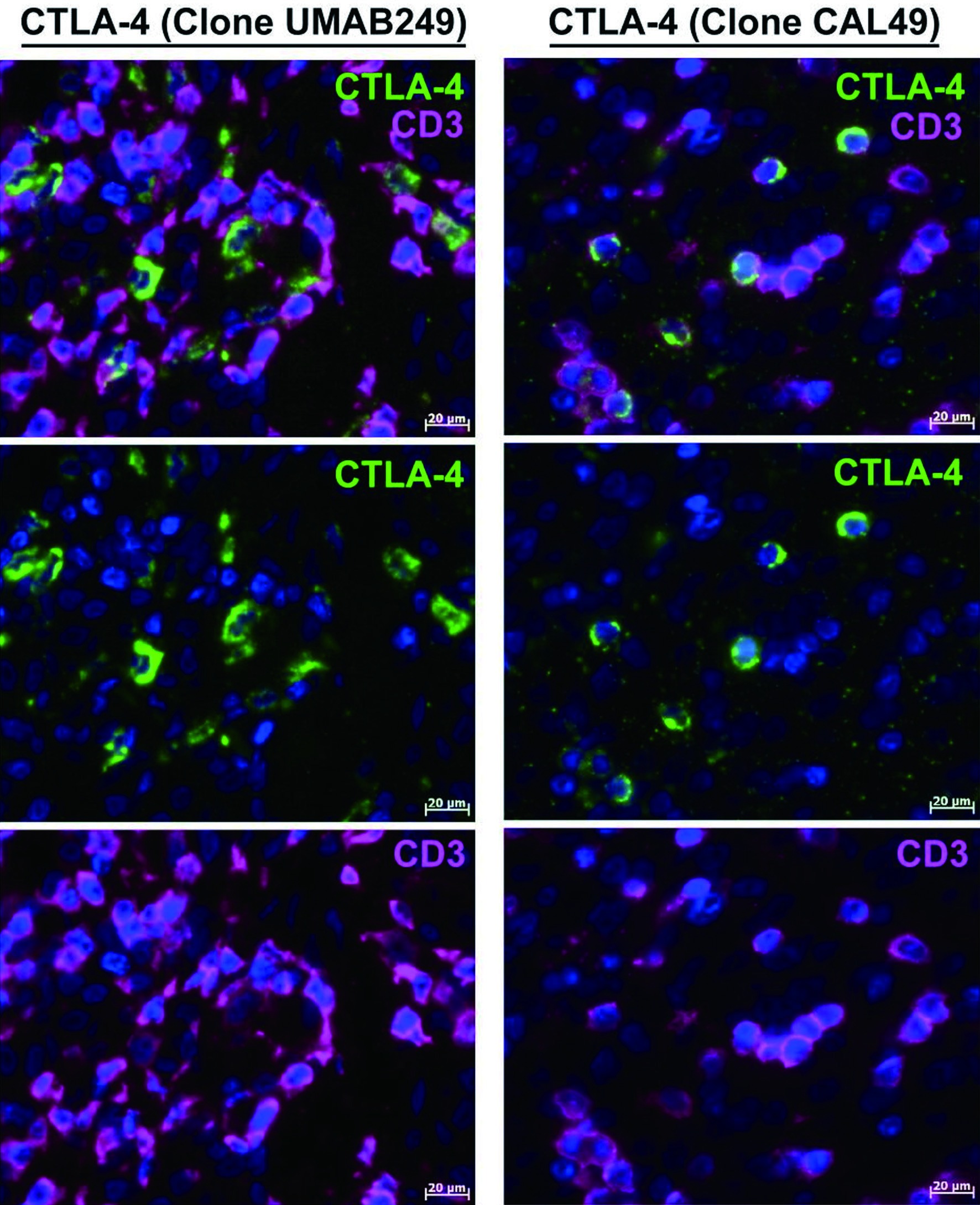
Background and objectives: The development of therapeutic anti-PD-1/PD-L1/CTLA-4 monoclonal antibodies, leading to the reactivation of a specific antitumor immune response, has emerged as a promising strategy for immunotherapy in various cancers, including melanoma. Given the complexity of the tumor microenvironment and the dynamic interaction between tumors and immune cells, a better understanding of the PD-1/PD-L1/CTLA-4 regulatory pathways in tumors is required. Methods: To address this issue, we performed immunophenotyping of CTLA4/PD1/PD-L1-positive cells in melanoma via multiple immunofluorescent immunolabeling. Primary antibodies against PD-1, PD-L1, and CTLA-4, along with a panel of CD antibodies targeting various cell types (CD1a, CD3, CD8, and CD68), were utilized for immunolabelling. Tyramide signal amplification (TSA) was used to visualize bound primary anti-CTLA-4 antibodies derived from four different clones. To simultaneously detect antigens from the same host species, TSA with subsequent heat elution was performed after each immunostaining step. Results: CTLA-4 and PD-L1 were not expressed in malignant cells in melanoma but were observed in the tumor microenvironment; especially in tumor-associated inflammatory cells such as macrophages and dendritic cells. Moreover, we found that CTLA-4 expression was not limited to T lymphocytes. Conclusions: The detection of CTLA-4 in various cells other than T lymphocytes suggests the participation of this molecule in regulating T lymphocyte activity beyond the well-known classical scheme. The expansion of the existing ideas regarding the role of CTLA-4 may lead to the development of new approaches for improving diagnostic accuracy. Additionally, these findings suggest that CTLA-4 has more widespread effects on immune regulation.

This work is licensed under a Creative Commons Attribution-NonCommercial-NoDerivatives 4.0 International License.
Copyright (c) 2023 Nature Cell and Science