

Keywords
Multimodal imaging
Optical coherence tomography
OCT angiography
Fundus fluorescein angiography
En face OCT
Choroidal vascular pathology
How to Cite
Abstract
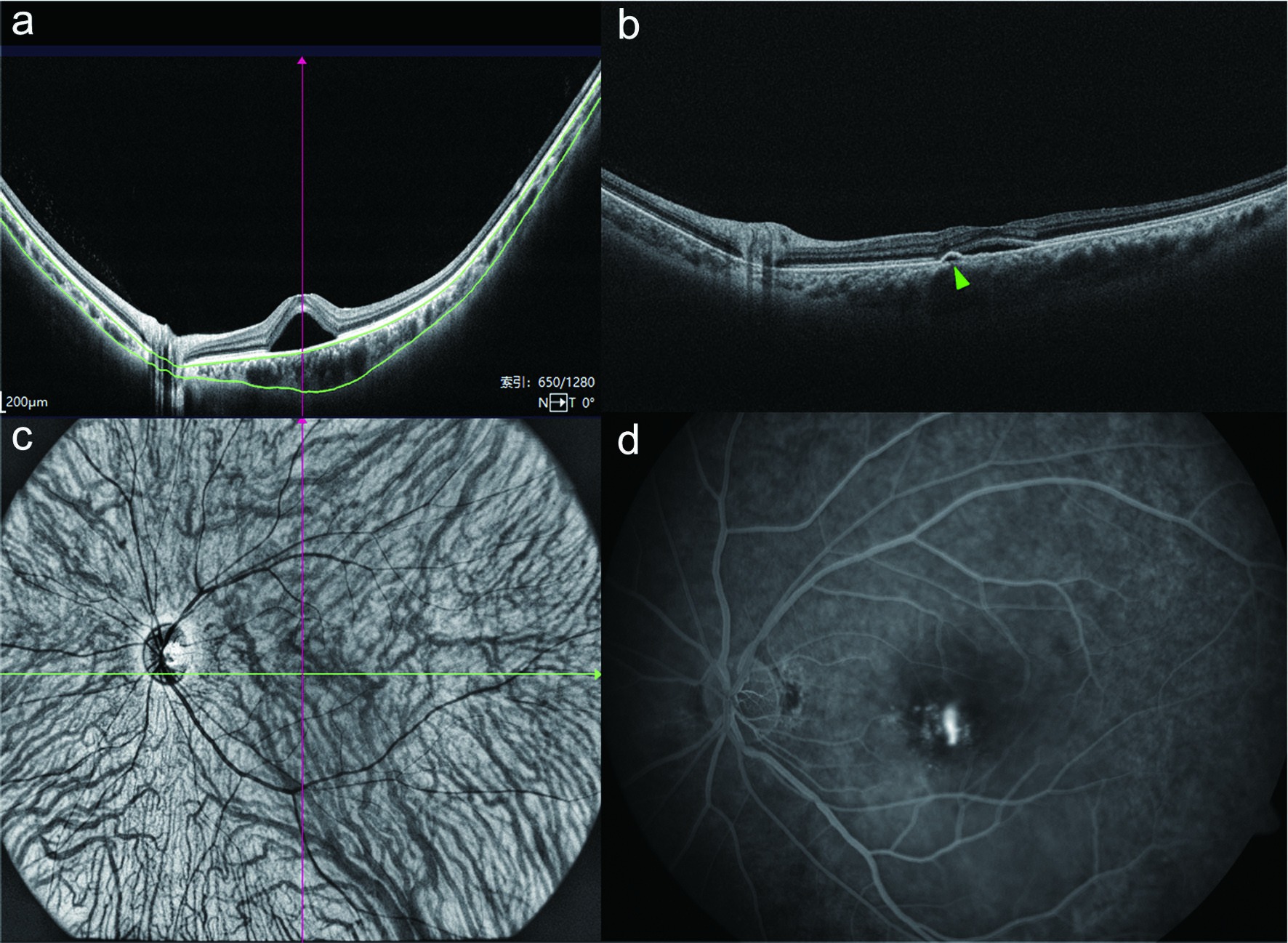
Central serous chorioretinopathy (CSC) is an ocular pathology that primarily manifests as serous retinal detachment, and its pathogenesis is linked to abnormalities in the choroidal vasculature and the retinal pigment epithelial (RPE) barrier. This review describes the current multimodal imaging approaches for CSC diagnosis, monitoring, and treatment, underscoring the pivotal role of fundus imaging in understanding the complex etiology of this disease. Optical coherence tomography (OCT), fundus fluorescein angiography, and indocyanine green angiography constitute the core imaging modalities. OCT facilitates detailed retinal and subretinal observation, while fundus fluorescein angiography and indocyanine green angiog- raphy offer insights into choroidal vessel permeability and retinal vascular leakage. The subtypes of CSC exhibit distinctive imaging features, with acute CSC presenting localized detachment, and chronic CSC showing various RPE changes and potentially concurrent choroidal neovascularization. En face OCT and OCT angiography augment traditional methods, offering noninvasive examination options that reveal choroidal and choriocapillary anomalies. With the capability of OCT angiography to image vasculature layers, it aids in distinguishing active CSC regions and discerning neovascular compo- nents. Furthermore, fundus autofluorescence provides metabolic information on the RPE, reflecting its functional state, and multispectral fundus imaging expands the ability to visualize retinal and choroidal layers distinctly. Developments in imaging technologies promise enhancements in CSC diagnosis and follow-up, projecting a future of more accurate and less invasive monitoring. Collectively, the integration of multimodal imaging presents a powerful strategy for understanding CSC pathophysiology, leading to improved patient care through personalized treatment approaches.

This work is licensed under a Creative Commons Attribution-NonCommercial-NoDerivatives 4.0 International License.
Copyright (c) 2023 Nature Cell and Science