

Versions
- 2023-09-28 (2)
- 2023-09-28 (1)
Keywords
Serine racemase
NMDAR
D-amino acid oxidase
Diabetic retinopathy
Excitotoxicity
Glaucoma
How to Cite
Abstract
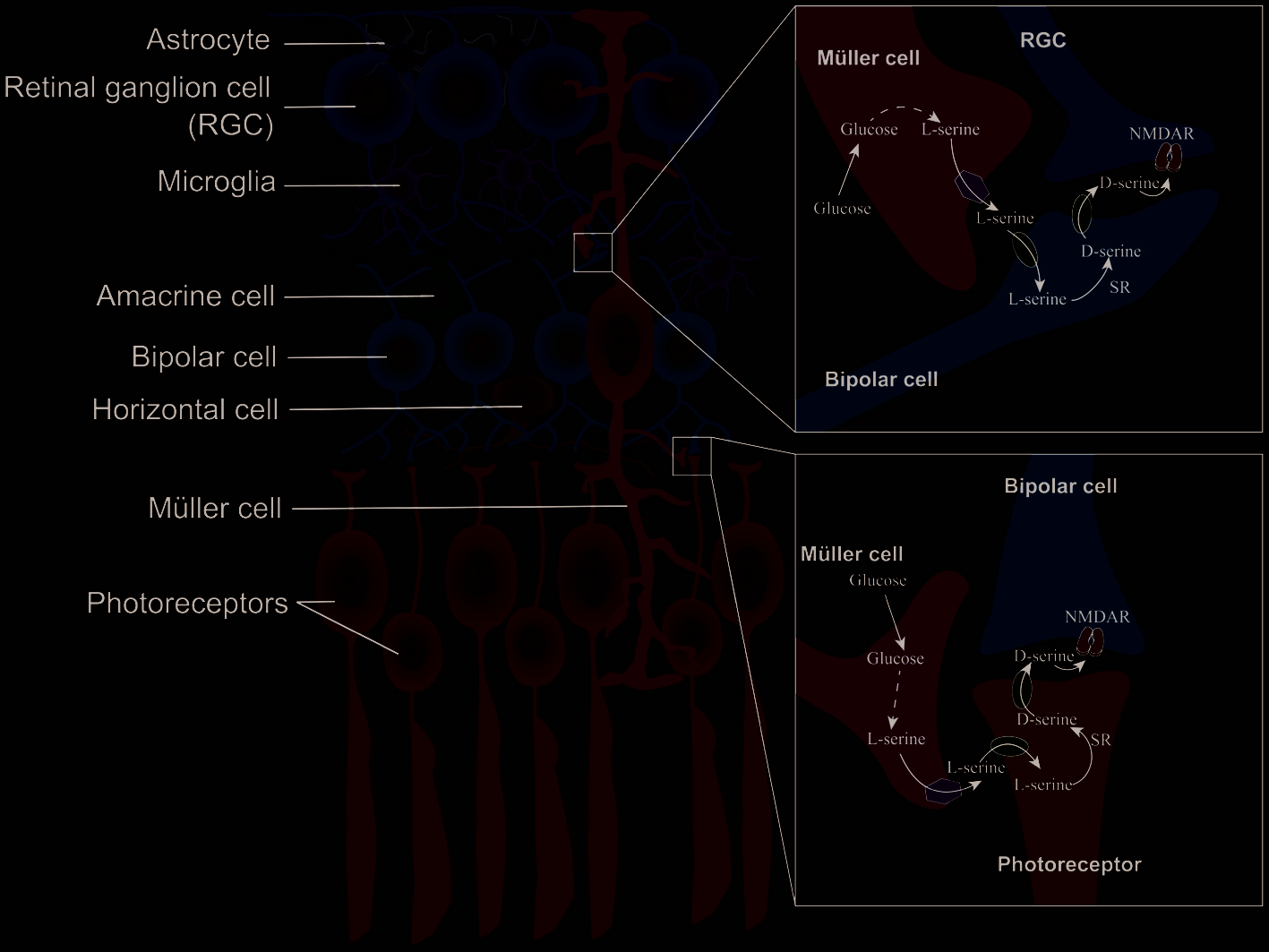
D-serine (D-ser) is highly enriched in the central nervous system and is a neuromodulator that acts on glutamate-bound N-methyl-D-aspartate receptor (NMDAR), playing vital roles in brain physiology and neuropsychiatric disorders. The levels of D-Ser are principally determined by serine racemase (SR) and D-amino acid oxidase (DAAO), and the regulations by these enzymes show regional differences in the brain. Reduction of D-Ser by chemicals or genetic modulation of SR or DAAO greatly attenuates NMDAR activity and the ensued excitotoxicity, a shared mechanism in neurodegenerative disorders and stroke. In the inner retina, D-Ser inhibits non-NMDA glutamate receptors and recruits NMDAR, thus potentiating the NMDAR-dependent current in retinal ganglion cells (RGCs). In the outer retina, D-Ser participates in vertical signal processing and maintains the retinal functional integrity. Accumulated studies suggest that D-Ser plays a role in diabetic retinopathy and glaucoma; in both disorders, RGC demise is a shared pathology. Loss of SR alleviates RGC death and retinal microvascular abnormalities in diabetic rodents, and increasing DAAO blunts RGC death in glaucoma animals. Thus, regulation of D-Ser availability by chemicals or genetic modulation of SR or DAAO may serve as a promising strategy to treat ocular disorders involving abnormal activation of NMDAR. This mini-review begins with the roles of D-Ser in the brain, extends the topic to the retina, and finally discusses relevant research progress in diabetic retinopathy and glaucoma. This is the first review highlighting the role of the NMDAR co-agonist D-Ser in the physiopathology of the retina.

This work is licensed under a Creative Commons Attribution-NonCommercial 4.0 International License.
Copyright (c) 2023 Pianshi Zhou and Shengzhou Wu