

Keywords
Pathogenesis
Prognosis
Treatment
Indocyanine green angiography
Opti- cal coherence tomography
Optical coherence tomography angiography
How to Cite
Abstract
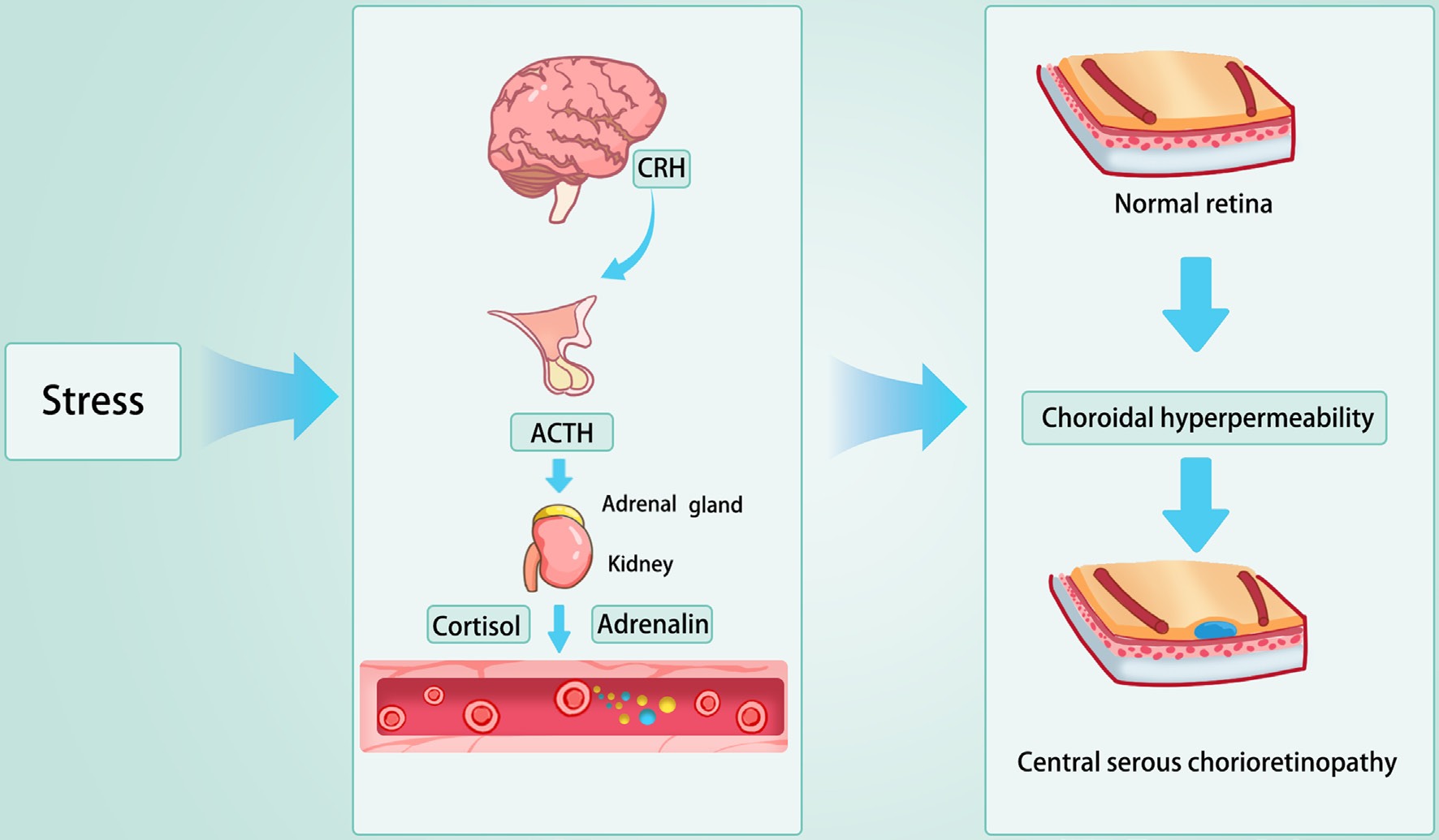
This review provides a comprehensive overview of central serous chorioretinopathy (CSC), a chorioretinal disorder char acterized by the accumulation of serous fluid beneath the neurosensory retina in the posterior pole, leading to serous detachment. It summarizes the pathogenesis of CSC, highlighting its close association with stress, dysregulation of corticotropin-releasing hormone, as well as glucocorticoids. The review also discusses the demographic profile, noting the higher prevalence in middle-aged males, and the condition’s recurrent nature, despite its tendency to self-resolve. Moreover, the review emphasizes the role of advanced diagnostic techniques, such as optical coherence tomography and optical coherence tomography angiography, in enhancing the understanding of CSC pathophysiology. It further explores the clinical implications of CSC during its active phase, where visual acuity impairment necessitates timely intervention, despite its self-limiting nature. The review discusses various treatment modalities, including photodynamic therapy, argon laser photocoagulation, and subthreshold micropulse laser therapy, which have been shown to accelerate symptom resolution and improve visual outcomes. Finally, the review proposes future perspectives in CSC research, aiming to explore novel therapeutic approaches and deepen the understanding of its underlying mechanisms, ultimately optimizing patient management and prognosis.

This work is licensed under a Creative Commons Attribution-NonCommercial-NoDerivatives 4.0 International License.
Copyright (c) 2025 Nature Cell and Science