

Keywords
Autophagy
Ubiquitin-proteasome
Eye disease
How to Cite
Abstract
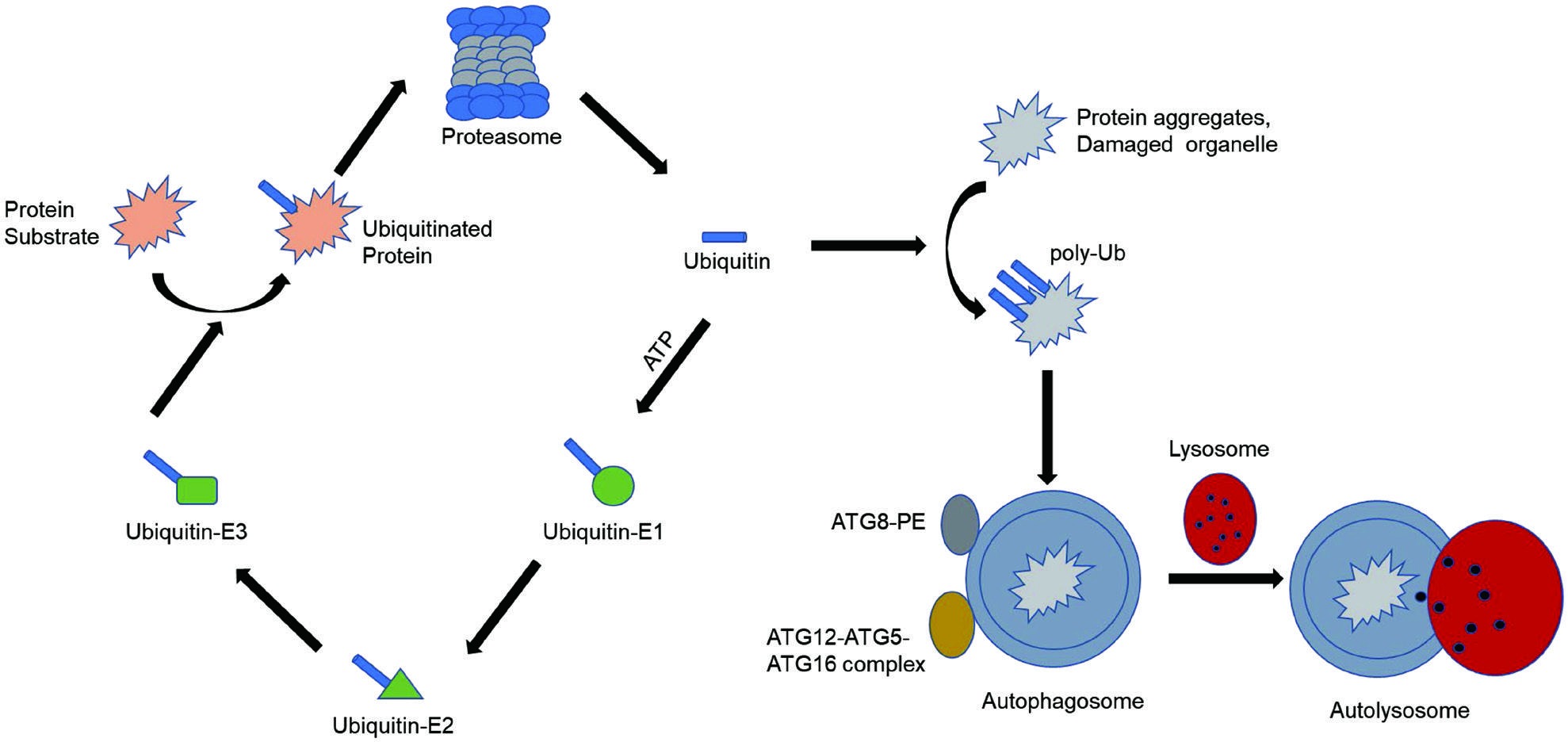
Age-related macular degeneration (AMD) is a prevalent eye disease in the elderly and one of the leading causes of vision loss. A hallmark of AMD is the presence of extracellular drusen deposits between the basal layer of the retinal pigment epithelium and Bruch’s membrane. At present, it is widely believed that there are two important mechanisms for the deg- radation and removal of abnormal proteins and organelles in cells, namely the ubiquitin-proteasome system (UPS) and the autophagy system. Recent studies have shown that UPS and autophagy play an important role in the development of AMD. The UPS is the major proteolytic pathway for short-lived, misfolded, and damaged proteins. It has important functions in the regulation of cellular signaling and transcription. Autophagy can maintain cell homeostasis and metabolic balance by devouring and degrading abnormal proteins and organelles in cells. This article reviews the research progress of UPS and autophagy in AMD and discusses their roles and interactions in the development of AMD. In addition, we also summarize the current treatment progress and application prospects, including potential therapeutic strategies and drug development. Further research on the mechanism of UPS and autophagy in AMD will help to understand the pathogenesis of AMD and provide new ideas and targets for the development of new therapeutic strategies.

This work is licensed under a Creative Commons Attribution-NonCommercial-NoDerivatives 4.0 International License.
Copyright (c) 2023 Nature Cell and Science