

Keywords
Cataract
Astigmatism
Myopia
Surgery
Lens
How to Cite
Abstract
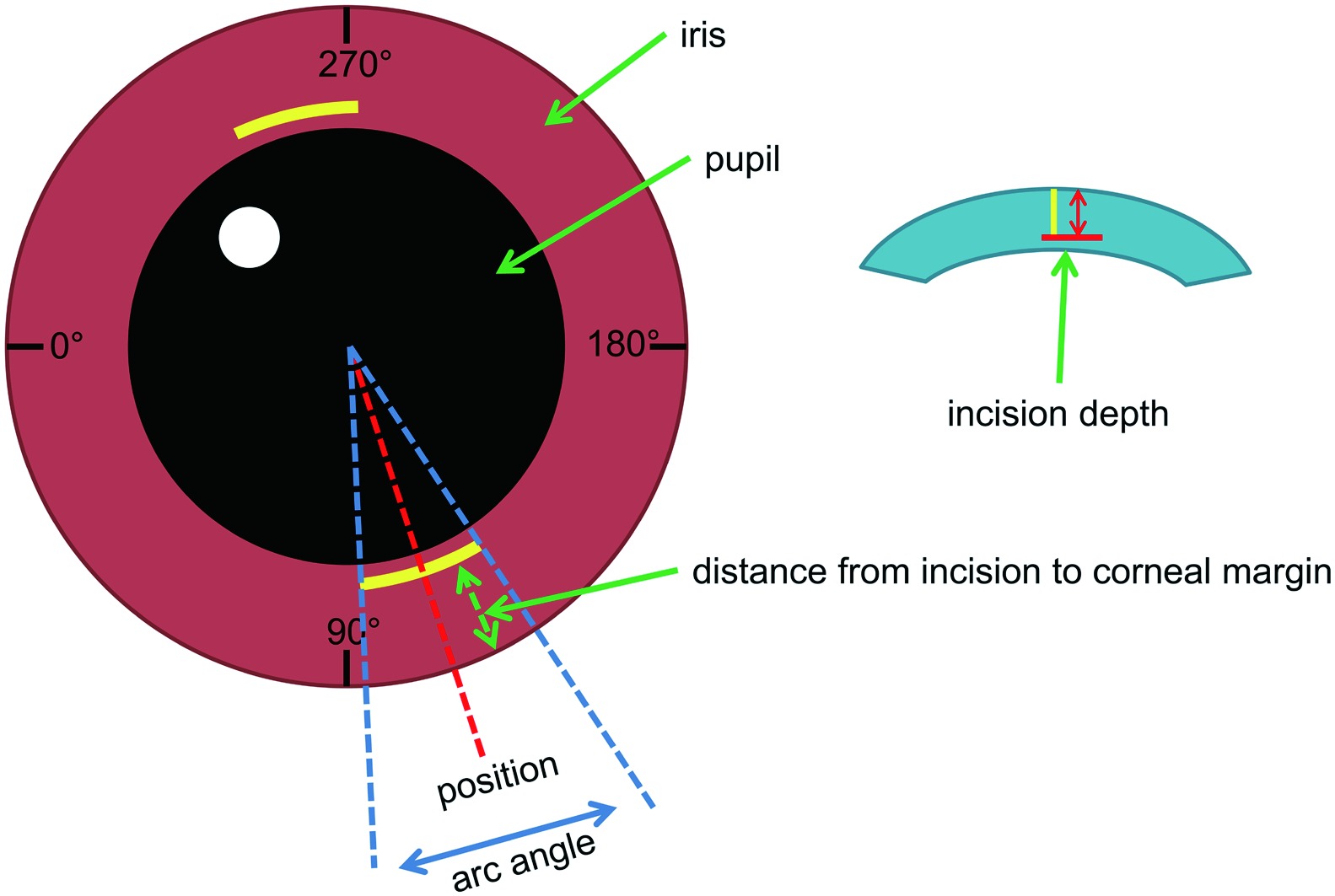
Femtosecond laser-assisted arcuate keratotomy (FSAK) has been shown to effectively correct mild to moderate astigmatism, though more research is needed for higher degrees of astigmatism. The surgical parameters of the procedure, including incision depth, proximity to the corneal margin, and the necessity of blunt dissection in penetrating techniques, significantly affect the outcome. Differences in outcomes between populations, potentially due to varying anatomical features, highlight the need for customized surgical designs. Comparisons between FSAK and other surgical strategies, such as manual corneal relaxing incisions, intrastromal FSAK, and the use of toric intraocular lens implants, suggest superior astigmatic correction with FSAK. The methodology exhibits enduring stability, coupled with a low frequency of regression and a notable enhancement in visual acuity. Nevertheless, the paucity of existing research literature necessitates a prudent approach and underscores the imperative for additional empirical investigations to substantiate these preliminary observations. Lastly, this review discusses potential complications, such as dry eye symptoms and corneal perforation, as well as an increase in high-order corneal aberrations post-surgery. Despite these challenges, femtosecond laser-assisted arcuate keratotomy represents a significant advancement in the field, providing improved correction of astigmatism and quality of life for cataract patients. Further advancements and studies are expected to hone the precision of this technique, ensuring safer and more effective outcomes.

This work is licensed under a Creative Commons Attribution-NonCommercial-NoDerivatives 4.0 International License.
Copyright (c) 2024 Nature Cell and Science