

Keywords
Photoreceptors
Gene therapy
Cell-based therapy
Oxidative stress
Mito - chondrial dysfunction
Epigenetic regulation
Non-coding RNAs
Inflammation
Srotein misfolding
Optogenetic therapy
Organoid models
How to Cite
Abstract
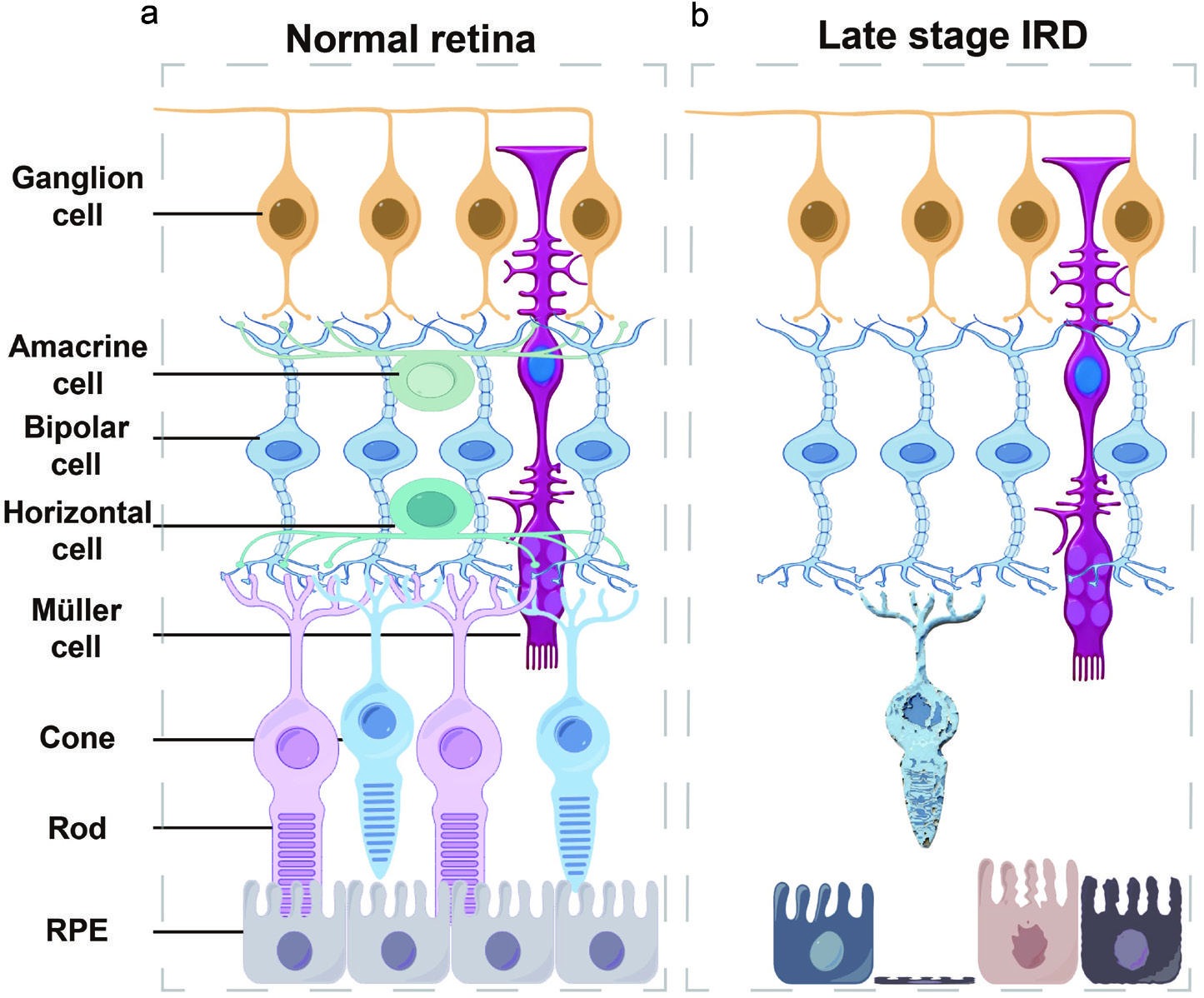
Retinal degenerative diseases (RDDs) represent a broad group of disorders characterized by the progressive loss of retinal structure and function, most notably the death of photoreceptors and retinal pigment epithelial cells. These disorders encompass hereditary conditions caused by monogenic or polygenic mutations, such as retinitis pigmentosa, Stargardt disease, and Leber congenital amaurosis, as well as non-hereditary forms caused mainly by environmental factors and aging, the most notable of which is age-related macular degeneration. RDDs are complex disorders driven by a conver gence of genetic, epigenetic, inflammatory, and proteostatic mechanisms. This review explores the multifaceted molecular underpinnings of retinal degeneration, with particular emphasis on the dynamic crosstalk between DNA methylation, noncoding RNAs, oxidative stress, mitochondrial dysfunction, chronic inflammation, and protein misfolding. We also highlight the pathogenic roles of microglial activation, endoplasmic reticulum stress, and impaired autophagy, in addition to vascular and extracellular matrix disruptions. Current therapeutic strategies focus on gene editing, epigenetic modulators, antian giogenic therapies, and stem cell transplantation, all of which have shown promise in clinical trials. However, challenges such as disease heterogeneity, limitations in preclinical models, and immune rejection continue to hinder the translation of these therapies to clinical practice. Future research must integrate single-cell multi-omics, organoid models, and artificial intelligence to better understand the cellular heterogeneity and mechanistic interplay of disease processes. This will be crucial for advancing precision medicine and developing multi-target combinatorial interventions. The objective of this review is to summarize recent advances in the molecular mechanisms of RDDs and to highlight emerging therapeutic strategies that may guide future research and clinical translation.

This work is licensed under a Creative Commons Attribution-NonCommercial-NoDerivatives 4.0 International License.
Copyright (c) 2025 Nature Cell and Science