

Keywords
SA-AKI
Epidemiology
Pathophysiology
Renal replacement therapy
RRT
Prognosis
How to Cite
Abstract
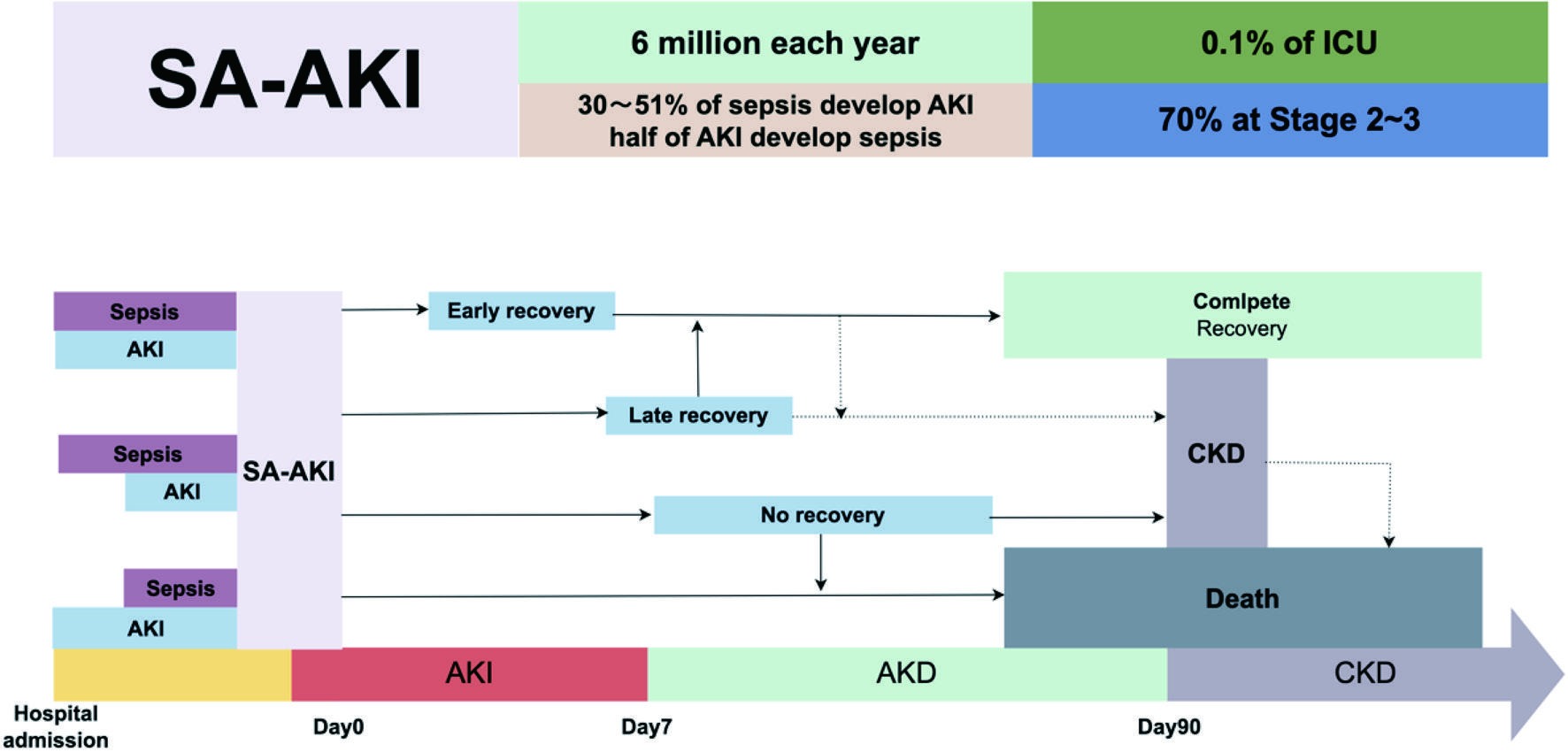
Sepsis-associated acute kidney injury (SA-AKI) is a prevalent and serious complication of sepsis, accounting for over half of all sepsis-related complications and significantly contributing to morbidity and long-term mortality in intensive care units. This review elucidates the global epidemiology of SA-AKI, with an estimated incidence of approximately six million cases annually, and underscores diagnostic challenges stemming from temporal uncertainties and reliance on serum creatinine and urine output metrics. Our findings highlight that SA-AKI pathophysiology extends beyond traditional ischemia/reper fusion frameworks, incorporating inflammatory responses, microcirculatory dysfunction, and metabolic changes in renal tubules. Effective management requires a dual approach that addresses both sepsis control and targeted renal support. While continuous renal replacement therapy is preferred for hemodynamically unstable patients, the efficacy of various blood purification strategies requires further validation. Key prognostic indicators include injury severity, intervention timing, and renal recovery potential, with early detection and prompt intervention offering a means to improve outcomes. Emerging research on novel biomarkers holds promise for advancing diagnosis and prognosis, but optimal treatment strategies—particularly concerning the timing of renal replacement therapy initiation—require further refinement through future randomized controlled trials. This review highlights the urgent need for continued research to resolve these challenges and improve clinical outcomes for SA-AKI patients.

This work is licensed under a Creative Commons Attribution-NonCommercial-NoDerivatives 4.0 International License.
Copyright (c) 2025 Nature Cell and Science