

Keywords
Neuroregeneration
Bioscaffold
Schwann cell
Mesenchymal stem cells
Autophagy
PI3K/AKT signaling pathway
How to Cite
Abstract
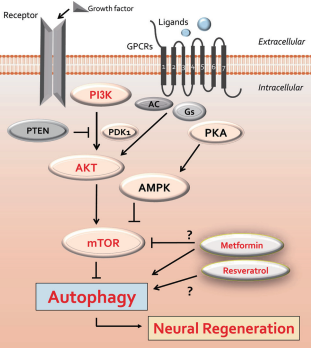
Nerve injury may trigger the loss of neural connectivity and everlasting functional deficits, which often include sensory and/or motor disability. Therefore, the neuroregeneration and/or repair of neurons may be imperative to maintain the intricate neural function. However, the recovery of neurons has been deliberated to be a challenging task that may require keen attention to various characteristics of treatment. First, comprehension of several neurite outgrowth factors is indispensable for complete nerve regeneration. Second, specific bioscaffolds with the capability of physical, chemical, and/or biological support to neurons as well as Schwann cells also can be obligatorily aimed at superior neuroregeneration. Interestingly, the survival of damaged neurons and/or axon regeneration can be encouraged by activating the phosphoinositide 3-kinase/AKT/mammalian/mechanistic target of the rapamycin intracellular signaling pathway. Therefore, understanding the molecular machinery and several related pathways with certain bioscaffolds that control the process of autophagy and/or anti-inflammation might be important to accelerate the development of novel therapeutics for superior neural regeneration.

This work is licensed under a Creative Commons Attribution-NonCommercial 4.0 International License.
Copyright (c) 2023 Author(s)