
Keywords
Aging
Age-related cognitive decline
Hippocampal neurogenesis
Subventricular zone (SVZ) neurogenesis
Neural stem cells
NSCs
Alzheimer disease
Neurodegenerative diseases
How to Cite
Abstract
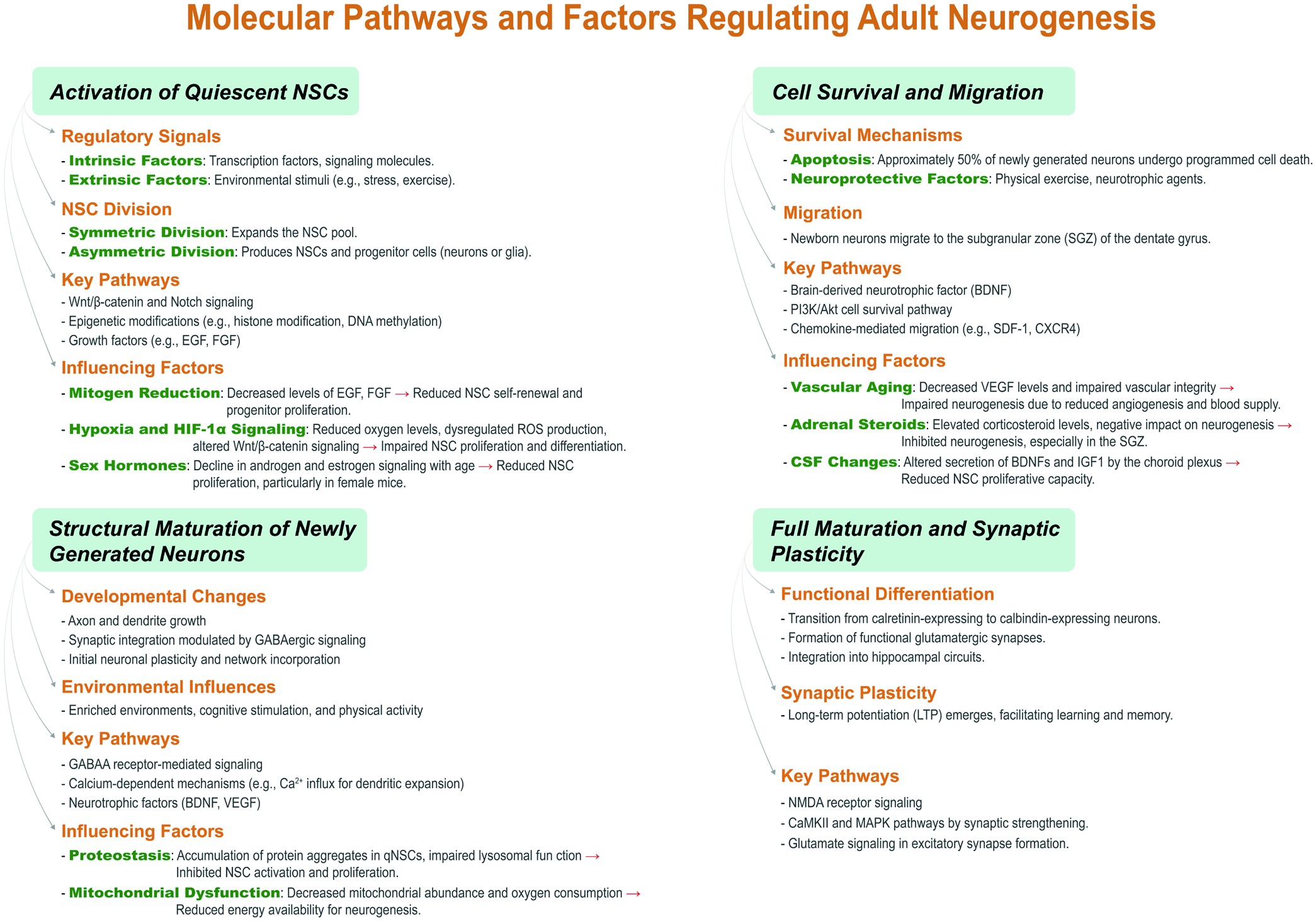
Adult neurogenesis is vital for maintaining cognitive function, brain plasticity, and resilience against age-related decline. However, disruptions in neurogenic pathways contribute to cognitive impairments and neurodegenerative diseases, underscoring the need for a deeper understanding of the underlying mechanisms. This review examines the molecular and cellular processes driving neurogenic decline and their impact on cognitive deficits. It evaluates pathological factors that impair neurogenesis and accelerate neurodegeneration while synthesizing current knowledge on the regulation and functional significance of adult neurogenesis. By exploring aging-related alterations in intrinsic signaling pathways, neural stem cell proliferation, and epigenetic modifications, this review highlights their collective role in cognitive dysfunction. Additionally, it addresses methodological challenges in studying neurogenesis and explores emerging strategies to overcome these limitations. Advances in imaging technologies and single-cell genomics have provided valuable insights into neurogenesis in the aging brain. Potential therapeutic strategies to mitigate neurogenic decline include activating dormant neural stem cells, enhancing neurogenic pathways, and leveraging molecular, environmental, and lifestyle interventions. However, translating these findings from animal models to clinical applications remains challenging due to concerns regarding safety, efficacy, and the risks of aberrant neurogenesis or tumorigenesis. Overcoming these limitations through rigorous research may pave the way for innovative therapies to preserve cognitive function and improve the quality of life in aging populations and individuals with neurodegenerative diseases.

This work is licensed under a Creative Commons Attribution-NonCommercial-NoDerivatives 4.0 International License.
Copyright (c) 2025 Nature Cell and Science