

Keywords
Personalized medicine
Prognostic biomarker
Tumor organoids
Patient-derived xenografts (PDX)
Disease Modeling
How to Cite
Abstract
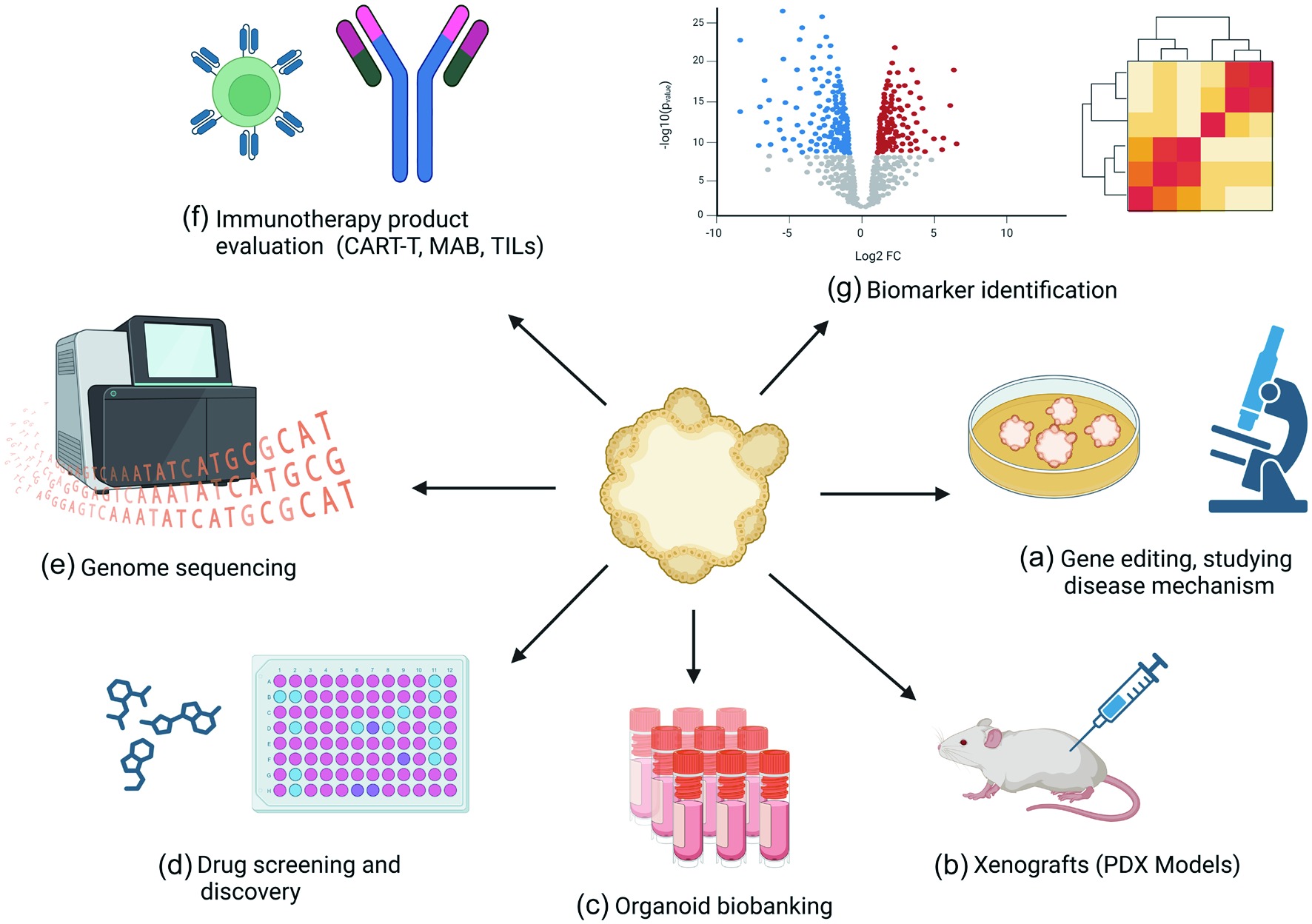
Tumor heterogeneity is a significant challenge in cancer treatment, as it often leads to therapeutic resistance and tumor recurrence. Commonly used tumor models, such as patient-derived xenografts and patient-derived tumor cells, have several limitations. Recent advances in three-dimensional (3D) organoid culture technology have introduced an alternative model that mimics the physiological environment of tissue in a dish. The use of organoid technology in oncology offers various advantages in accelerating cancer research. Patient-derived tumor organoids (PDTOs) fill gaps left by patient-derived tumor cell and patient-derived xenograft models due to their pathophysiological similarities to natural metastasis and carcinogenesis. For this reason, PDTOs can be used as an approach for drug assessment, the discovery of prognostic biomarkers, and the identification of resistance mechanisms to help tailor personalized therapies for combating cancer resistance and recurrence. Additionally, the technology can be utilized for biobanking and discovering novel anti-cancer molecules, as well as validating drugs approved by the U.S. Food and Drug Administration with the potential for repurposing in cancer therapy. This offers new treatment options and can extend the life expectancy of cancer patients. In this review, we highlight the most recent developments in oncology-related tumoroid research, with particular emphasis on PDTOs and their potential for translational research, especially in the testing of anti-cancer drugs.

This work is licensed under a Creative Commons Attribution-NonCommercial-NoDerivatives 4.0 International License.
Copyright (c) 2024 Nature Cell and Science