

Keywords
Neoadjuvant treatment
Targeted therapy
PD-L1
Triple-negative breast can- cer
Tumor-infiltrating lymphocytes
Tumor mutational burden
How to Cite
Abstract
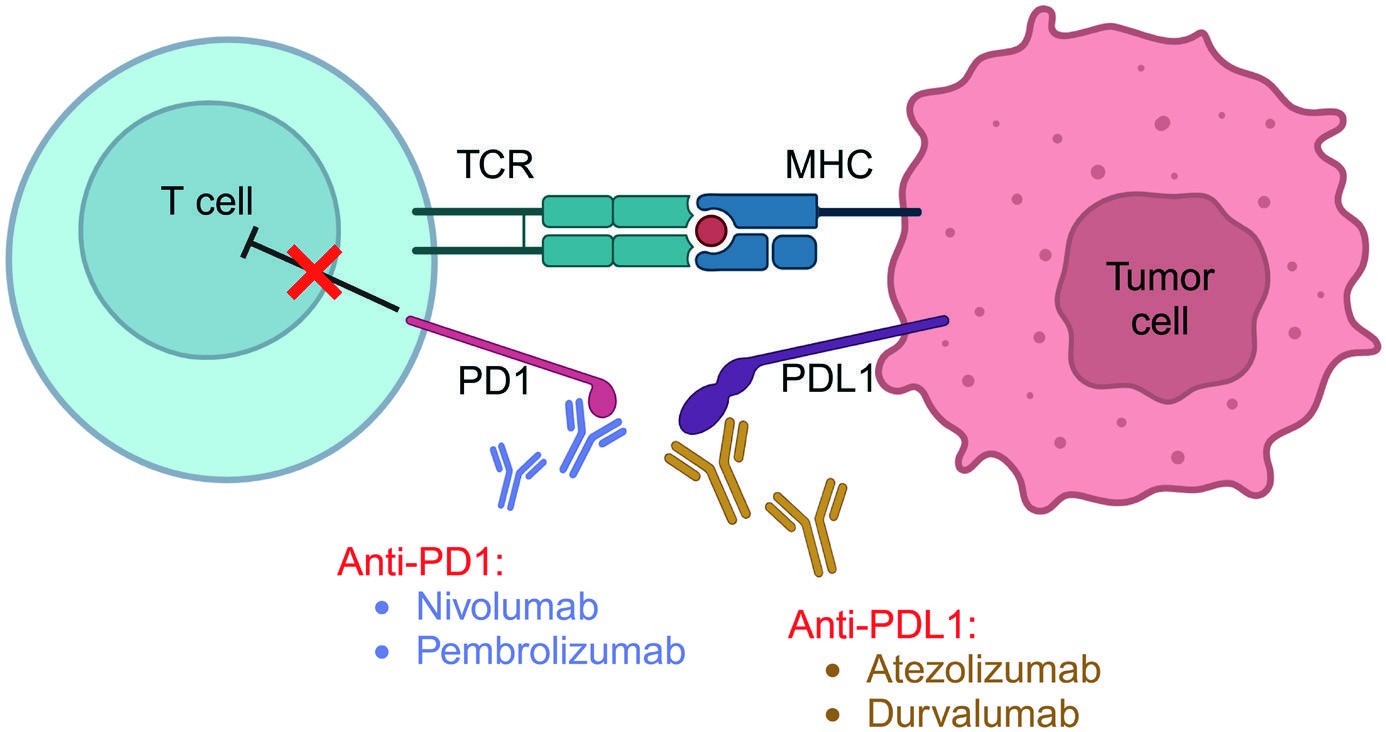
Triple-negative breast cancer (TNBC) is a challenging subtype of cancer due to its aggressive nature and limited treatment targets. Immune checkpoint inhibitors (ICIs) have emerged as promising agents, especially for treating tumors expressing programmed cell death ligand-1 (PD-L1). This review discusses recent advances in the use of programmed cell death receptor-1 (PD-1)/PD-L1 monoclonal antibodies for TNBC treatment and evaluates the roles of predictive markers such as PD-L1, tumor mutational burden, stromal tumor-infiltrating lymphocytes (sTILs), and CD8-positive T cells. PD-L1, a cru- cial modulator of the immune response, has shown conflicting outcomes as a predictive marker for ICI efficacy in TNBC, with varying responses observed in metastatic versus early stages. Similarly, tumor mutational burden has emerged as a potential predictor of response to ICIs, yet its standardization and correlation with long-term immunity require further elu- cidation. The sTILs and CD8-positive T cells, indicative of host immune engagement, present some predictive value. The review highlights the significant clinical progress in the use of ICIs combined with chemotherapy as neoadjuvant treatment, demonstrating improvements in pathological complete response rates and survival outcomes. Additionally, advancements in combining ICIs with targeted therapies such as poly ADP-ribose polymerase inhibitors, Antibody-Drug Conjugates, and small molecule anti-angiogenic inhibitors have been assessed for their potential to enhance efficacy, particularly in meta- static settings. Despite the substantial progress, challenges remain in the precise selection of patients likely to benefit from ICI-based therapies. This article innovatively summarizes the different immunotherapeutic approaches and combinations of immunotherapeutic drugs evaluated in clinical trials, which could provide a reference for future research.

This work is licensed under a Creative Commons Attribution-NonCommercial-NoDerivatives 4.0 International License.
Copyright (c) 2023 Nature Cell and Science