

Keywords
Mouse
Myeloid cell types
Central nervous system
Single-cell RNA sequencing
Clusters
How to Cite
Abstract
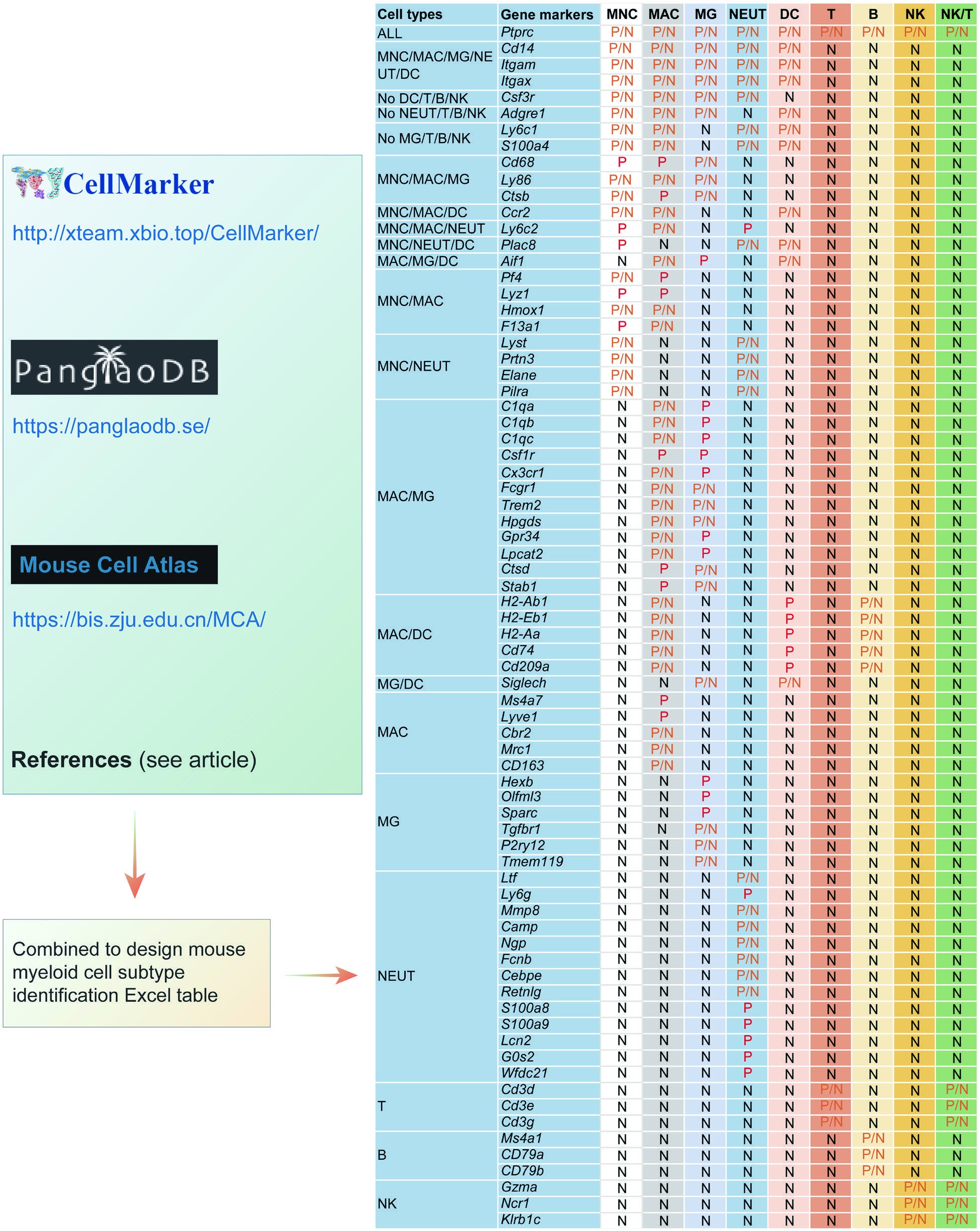
Background and objectives: Due to the highly overlapping and dynamic gene expressions, it is difficult to distinguish the subtypes of myeloid cells in the central nervous system (CNS). Single-cell RNA sequencing (scRNA-Seq), which can divide the cells into different clusters based on the similarity of gene expression, is a promising technology to solve this question. However, the cell type identity based on the data of scRNA-Seq is still a knotty problem. Although, there are many bioinformatics software and R/Python coding. For ordinary researchers, this is indeed a challenge. Therefore, a simple and effective cell type identification method is needed. Methods: Combining CellMarker, PanglaoDB, Mouse Cell Atlas, and the recent literature, the authors designed an Excel template, in which a panel of gene makers corresponding to the myeloid cells were included. The 83 cell clusters, from several recently reported single-cell data, were used to verify its accuracy. Bowker’s test and kappa symmetric measures were used to test its difference and consistency with the literature, respectively. Results: The template could easily distinguish myeloid cell-subtypes based on the normalized and clustered data. Compared with the literature, the overall consistency rate was 93.98%. There was no statistically significant difference (Bowker’s test, p > 0.05). Kappa symmetric measures showed that the kappa value = 0.642 (p < 0.01). Conclusions: The template can be used to distinguish the myeloid cell-subtypes of CNS, it will also encourage researchers pertaining to different fields interested in utilizing the ever-growing scRNA-Seq data to design similar templates and pipelines for the specific cell population.

This work is licensed under a Creative Commons Attribution-NonCommercial-NoDerivatives 4.0 International License.
Copyright (c) 2023 Nature Cell and Science