

Keywords
Tumor microenvironment (TME)
Neuro -stromal-immune axis
CGRP-RAMP1 signaling
Immune exclusion
Perineural invasion (PNI)
Cancer-associated fibroblasts (CAFs)
Immunotherapy resistance
How to Cite
Abstract
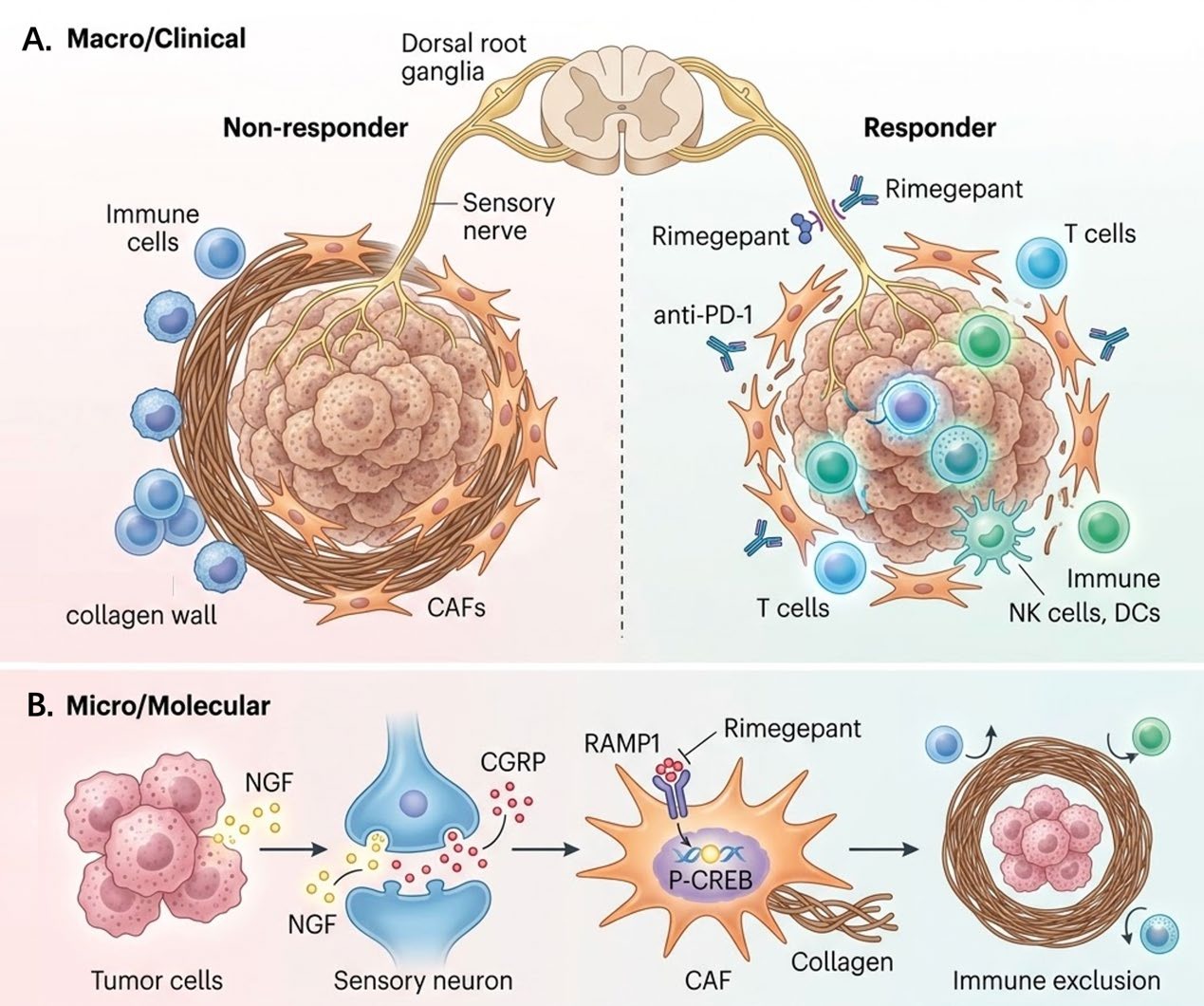
Triple-negative breast cancer (TNBC) exhibits substantial primary resistance to immune checkpoint blockade (ICB), a challenge driven largely by a desmoplastic and immunosuppressive tumor microenvironment (TME). Emerging multi-omics and spatial profiling technologies have unveiled the peripheral nervous system— specifically nociceptive sensory innervation— as an important regulator of this pathogenic remodeling. This review systematically dissects the “neuro -stromal-immune axis” in TNBC. We delineate how stressed tumor cells secrete nerve growth factor (NGF) to actively recruit TRPV1+ sensory fibers (axonogenesis) and hijack them for metastasis via PlexinB3-mediated perineural tracking. Critically, these infiltrating sensory nerves release the neuropeptide calcitonin gene -related peptide (CGRP), which binds to RAMP1 receptors on myofibroblastic cancer-associated fibroblasts (myCAFs). This neuro-stromal interaction triggers a cAMP-PKA-CREB1 signaling cascade that drives substantial collagen deposition, constructing a dense physical barrier that culminates in the spatial exclusion of cytotoxic CD8+ T cells. Concurrently, direct CGRP signaling induces functional exhaustion in infiltrating T cells. Finally, we explore emerging translational strategies, highlighting the repurposing of clinical CGRP receptor antagonists (migraine therapeutics) and localized denervation as potential combinatorial approaches to disrupt the neuro-fibrotic barrier and resensitize TNBC to ICB therapy.

This work is licensed under a Creative Commons Attribution-NonCommercial-NoDerivatives 4.0 International License.
Copyright (c) 2026 Nature Cell and Science