

Keywords
Hydroxyurea
Fetal hemoglobin
Nutritional intervention
Antioxidants
Anti-inflammatory
How to Cite
Abstract
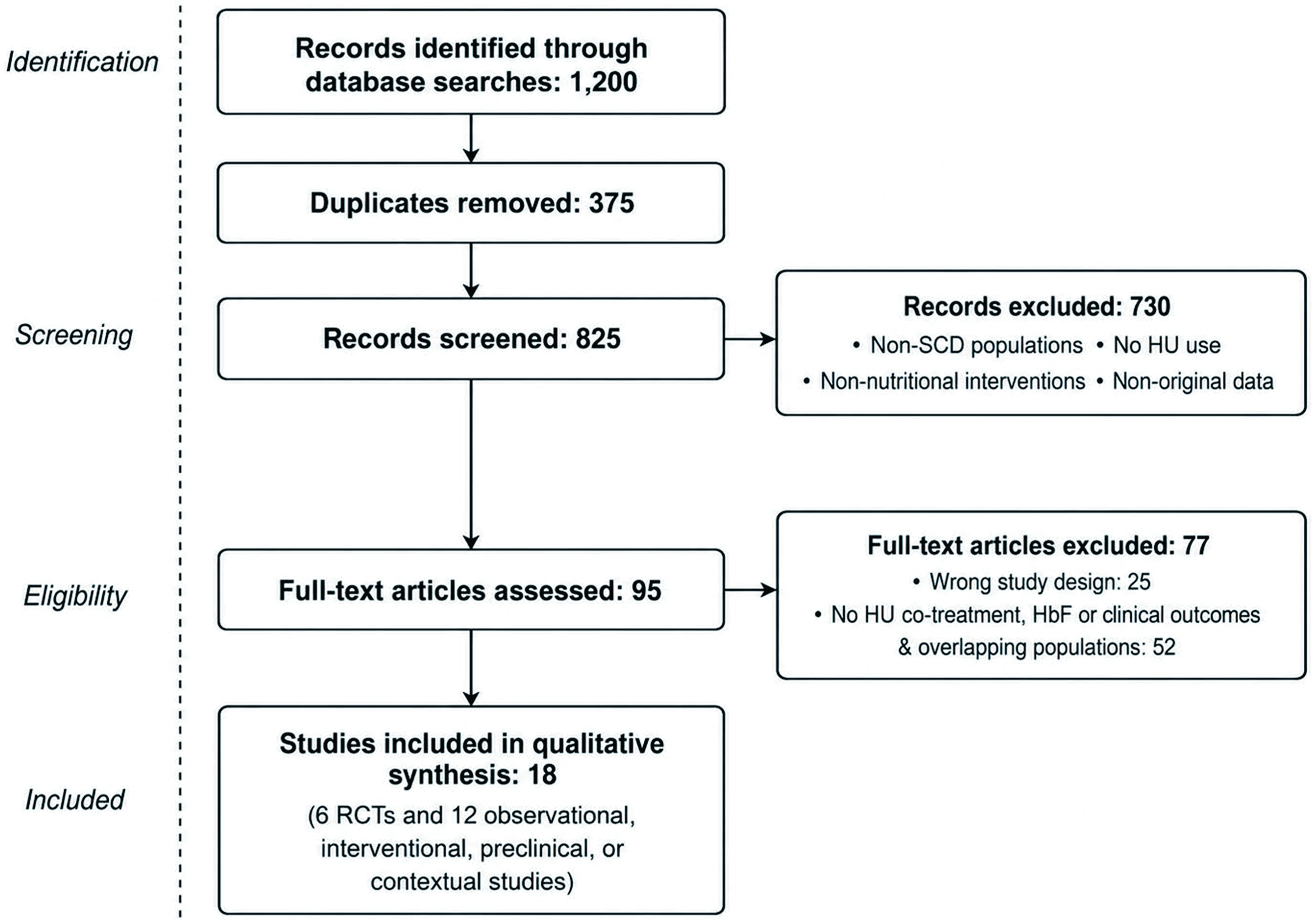
Background and objectives : Nutritional status and bioactive dietary compounds may influence the clinical course of sickle cell disease (SCD) and modify fetal hemoglobin (HbF) response to hydroxyurea (HU). Evidence suggests that micronutrients, amino acid therapies, antioxidants, and anti-inflammatory strategies can serve as adjuncts to HU, though their effects on HbF induction are not yet fully established. This systematic review evaluates the impact of nutritional interventions on HU-mediated HbF induction and key clinical outcomes in individuals with SCD. Methods: A systematic search of PubMed, Scopus, the Cochrane Library, Google Scholar, and African Journals Online identified studies published between January 2018 and December 2025. Eligible studies included patients with SCD on HU receiving nutritional interventions. HbF was the primary outcome; vaso-occlusive crises (VOCs), hospitalization, and oxidative stress indices were secondary outcomes. Risk of bias was assessed using the Cochrane RoB 2 and Newcas tle–Ottawa tools, and certainty of evidence was graded using GRADE. The review protocol was registered in PROSPERO (CRD420251268453), following PRISMA 2020 guidelines. Results: Eighteen studies and contextual evidence sources were included, comprising randomized trials, observational/ interventional studies, and selected contextual mechanistic or pharmacological evidence. L-glutamine showed the strongest evidence for reducing VOCs and hospitalizations. Omega-3 fatty acids provided evidence for reducing pain-crisis outcomes and improving oxidative or inflammatory markers, though HbF effects were inconsistent. Vitamin D improved vitamin D status, bone-related outcomes, muscle strength, and HRQoL, with limited direct impact on HbF. Arginine therapy reduced pain scores and hospital stays during crises. Nutritional rehabilitation with ready-to-use therapeutic food improved treatment feasibility in malnourished patients. Butyrate remained biologically plausible but lacked sufficient contemporary clinical validation, while micronutrient status and HU-treated cohort data were associated with hematologic indices, oxidative stress markers, or growth-related outcomes, with limited evidence for direct micronutrient-driven HbF improvement. Phytochemicals demonstrated in vitro benefits but lack clinical validation. Conclusions: Nutritional interventions are promising adjuncts to HU therapy. The strongest evidence supports L-glu tamine for reducing VOCs and hospitalizations, while omega-3 fatty acids may improve pain-crisis outcomes and oxidative or inflammatory markers. Nutritional rehabilitation is particularly relevant in resource-limited settings. Butyrate and phy tochemicals remain experimental. Larger, well-designed trials are needed to clarify long-term benefits and nutrient–drug interactions.

This work is licensed under a Creative Commons Attribution-NonCommercial-NoDerivatives 4.0 International License.
Copyright (c) 2026 Nature Cell and Science