

Keywords
Tau propagation
Metabolic dysfunction
Monocarboxylate transporter
Neurodegen- eration
Energy metabolism
Tau hyperphosphorylation
Neuroinflammation
Brain glucose metabolism
Synaptic dysfunc- tion
Alzheimer’s disease
Tauopathies
How to Cite
Abstract
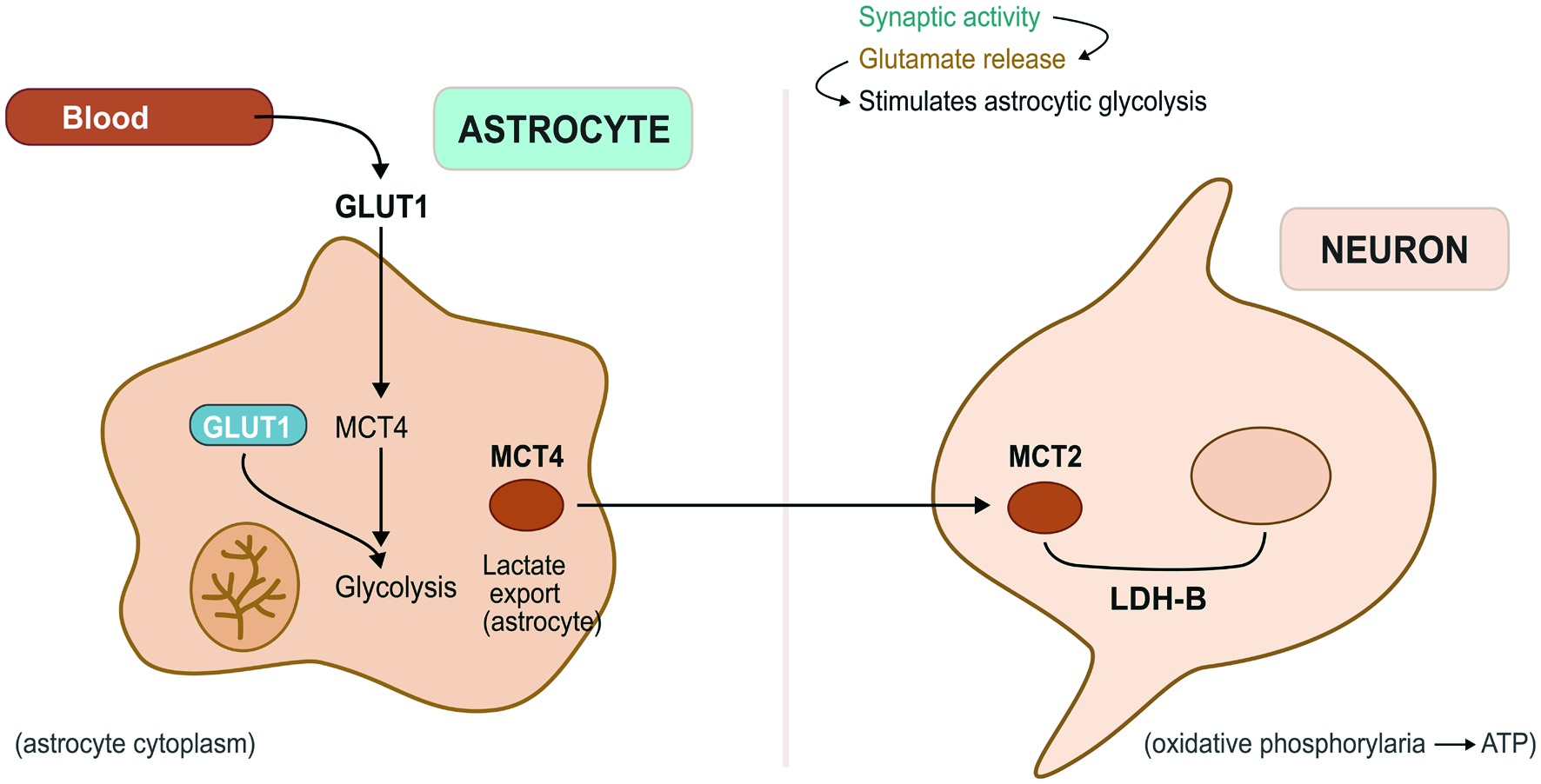
The astrocytic lactate shuttle is a vital metabolic pathway connecting neurons and astrocytes via monocarboxylate transporters MCT1, MCT2, and MCT4. Recent evidence indicates that its dysfunction may be a key factor in tau pathology associated with neurodegenerative diseases. This review analyzes the impact of impaired astrocytic glucose uptake and lactate production on energy-deficient neuronal microenvironments, leading to tau hyperphosphorylation, aggregation, and trans-neuronal spreading. This review investigates the molecular mechanisms by which metabolic failure alters the kinase-phosphatase balance, leading to pathogenic tau modifications, particularly in brain regions with high energy demands that exhibit increased vulnerability. This review consolidates findings from cell culture studies, animal models, and human neuroimaging, indicating that metabolic abnormalities occur prior to observable tau accumulation, thereby suggesting that energy dysfunction is a driving factor of tau pathology rather than a result. This review investigates the role of lactate dysregulation in activating inflammatory cascades via microglia and stress-response pathways, which further intensify tau spreading. We assess therapeutic strategies aimed at the astrocytic lactate shuttle, such as metabolic enhancers, lactate supplementation, and transporter modulators, highlighting their preclinical promise and clinical potential. This analysis offers a framework for understanding metabolic dysfunction as a pathogenic mechanism and therapeutic target in Alzheimer’s disease and related tauopathies.

This work is licensed under a Creative Commons Attribution-NonCommercial-NoDerivatives 4.0 International License.
Copyright (c) 2025 Nature Cell and Science