

Keywords
Dopamine
Neuro-degeneration
Cognition
Aging
Macro- and micronutrients
How to Cite
Abstract
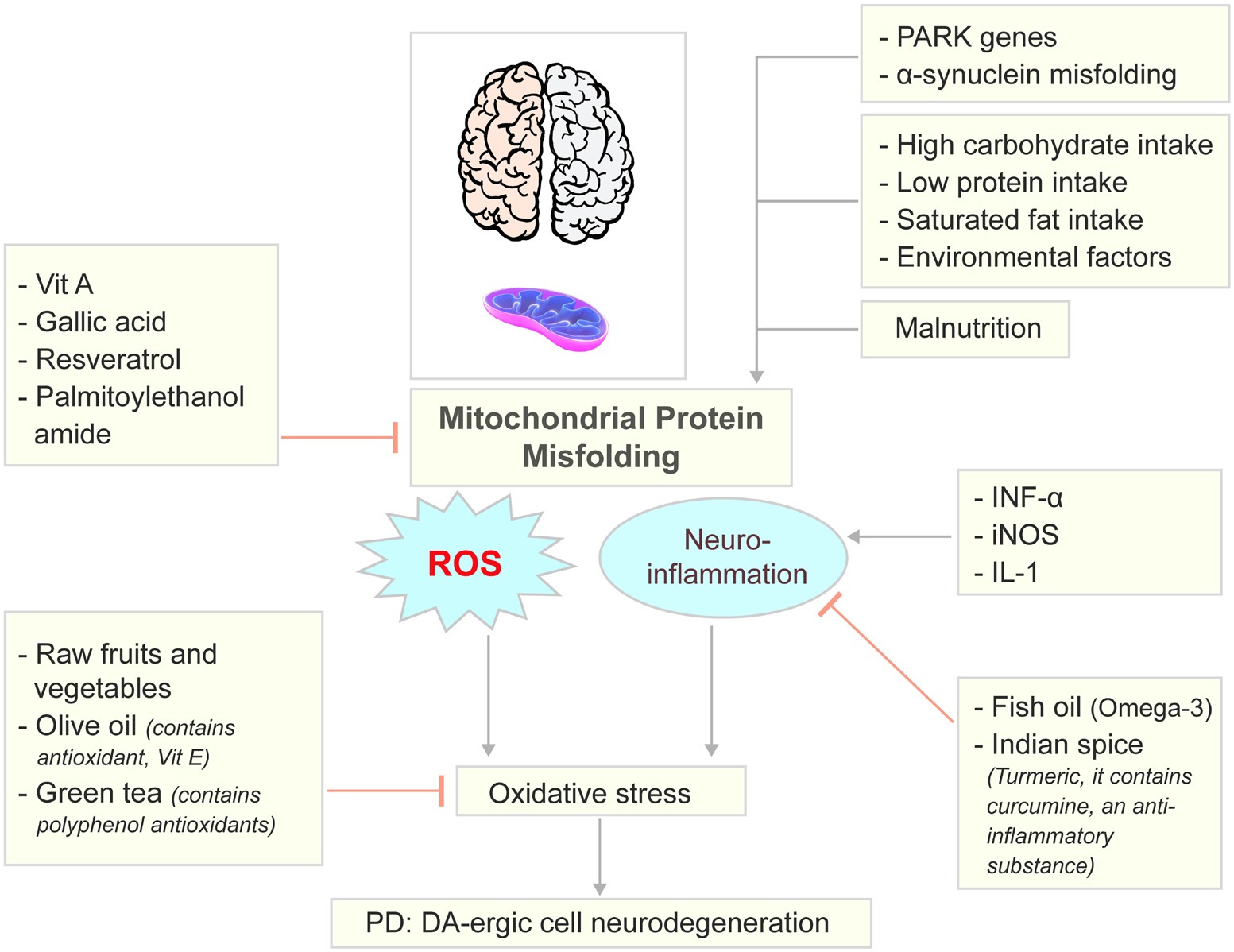
Parkinson’s disease (PD) is described as an age-related neurodegenerative disease primarily caused by the loss of dopamine, a neurotransmitter, in the substantia nigra pars compacta. In this disease, tremor, movement disorders, and postural instability are generally observed, and depression gradually develops. However, various non-motor symptoms such as mood changes, depression, cognitive impairment, anxiety, constipation, and others are often observed before the PD diagnosis and worsen as the disease progresses. Generally, this disease is still considered idiopathic, with multiple possible causes including pesticides and brain injury. In familial cases of PD, however, a set of genes have been identified as causes of PD, including the α- synuclein gene, Parkin, PTEN-induced kinase 1, and Leucine-rich repeat kinase 2 . To date, there is no cure for this disease, except for some palliative treatments such as dopa/dopamine therapy. Dopamine administration from external sources is effective only for a couple of years; after that, dyskinesia and other neurological complications develop. Scientists are researching gene and cell therapies, but effective solutions have yet to be found. Since environmental factors are involved in the majority of PD cases, it is important to understand the role nutrition plays in both neuroprotection and neurodegeneration. In this context, managing PD through nutrition, for example, by choosing the right foods to consume or avoid, may benefit Parkinson’s patients. In short, the Mediterranean diet combined with the Dietary Approaches to Stop Hypertension diet, known together as the Mediterranean-Dietary Approaches to Stop Hypertension Intervention for Neurodegenerative Delay diet, has been found effective in maintaining better cognitive function and quality of life among patients.

This work is licensed under a Creative Commons Attribution-NonCommercial-NoDerivatives 4.0 International License.
Copyright (c) 2025 Nature Cell and Science