

Keywords
Cadmium acetate
Glycogen synthase kinase-3 beta
GSK-3β
Alzheimer’s disease
Molecular docking
How to Cite
Abstract
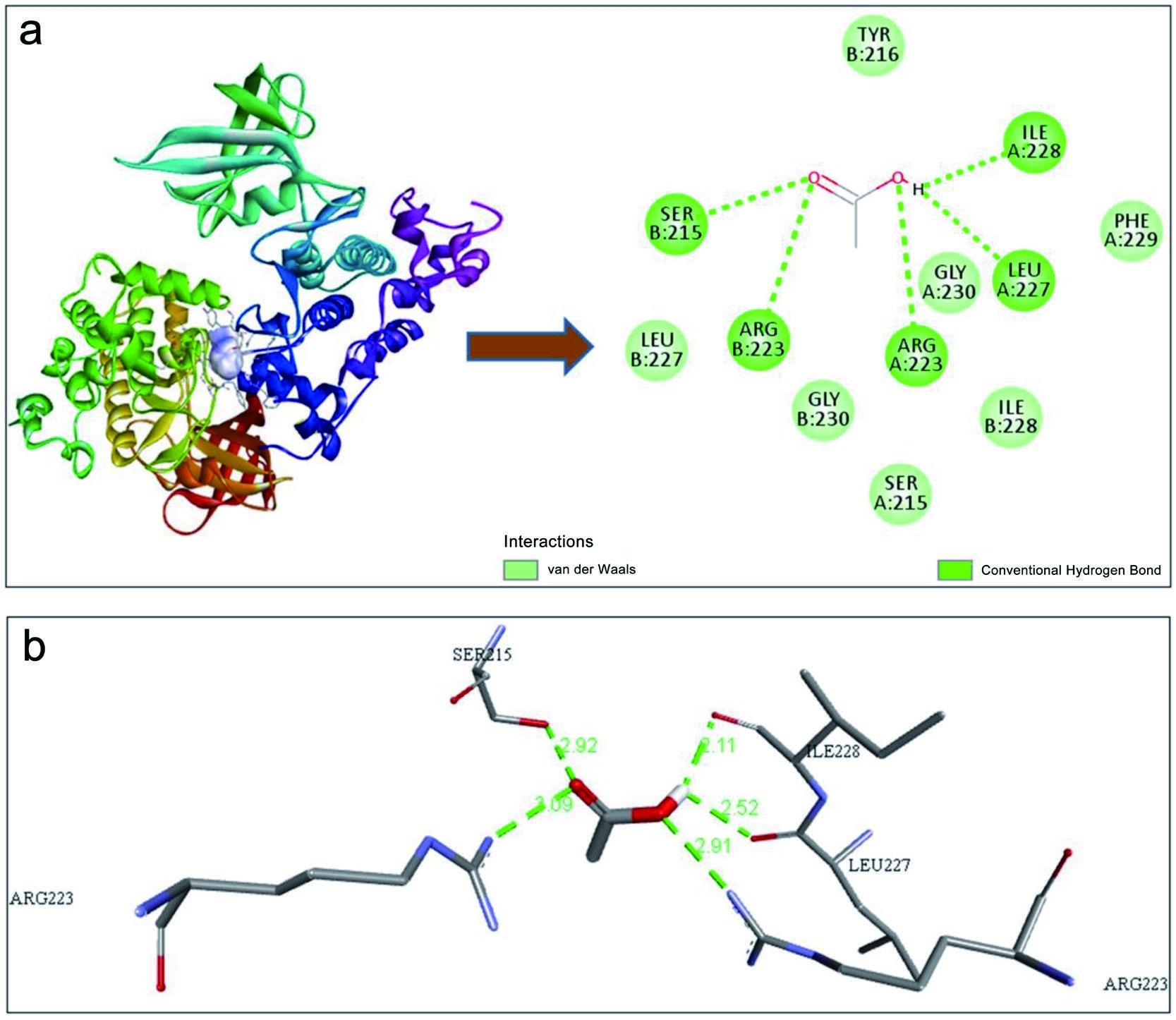
Background and objectives: Alzheimer’s disease (AD) is a neurodegenerative disorder closely linked to the dysregulation of glycogen synthase kinase-3 beta (GSK-3β), a critical enzyme for neuronal health. Cadmium acetate, a prevalent environmental toxin, has been implicated in neurological impairments. This study investigated the molecular interactions between cadmium acetate and GSK-3β using in-silico approaches to assess its potential role in AD progression and explore therapeutic implications. Methods: Molecular docking was conducted using the GSK-3β structure (PDB ID: 1i09) and cadmium acetate (compound identifier: 10986). The receptor protein was prepared by removing water molecules and adding polar hydrogens. Blind docking simulations were conducted to identify potential binding sites, and validation was performed by re-docking a known crystallized ligand. Binding energy and affinity were evaluated using standard computational protocols. Results: Cadmium acetate binds to GSK-3β through nine modes of interaction, primarily involving hydrogen bonds and Van der Waals forces. The binding energy of −3.4 kcal/mol suggests a weak interaction. Key residues involved include Ile A:228 and Ser B:215. Although the binding energy indicates weak interactions, chronic exposure to cadmium acetate may lead to cumulative effects. In silico analysis revealed potential binding sites and residues implicated in enzyme dysregulation. Conclusions: This study underscores the neurotoxic potential of cadmium acetate and its role in inducing GSK-3β dysregulation, which may exacerbate AD progression. The findings provide a foundation for experimental validation and therapeutic exploration to address the impact of environmental toxins on neurodegenerative diseases.

This work is licensed under a Creative Commons Attribution-NonCommercial-NoDerivatives 4.0 International License.
Copyright (c) 2025 Nature Cell and Science