

Keywords
Parkinson’s disease
Huntington’s disease
Mitochondrial interactome
Mi - tophagy
Environmental toxins
How to Cite
Abstract
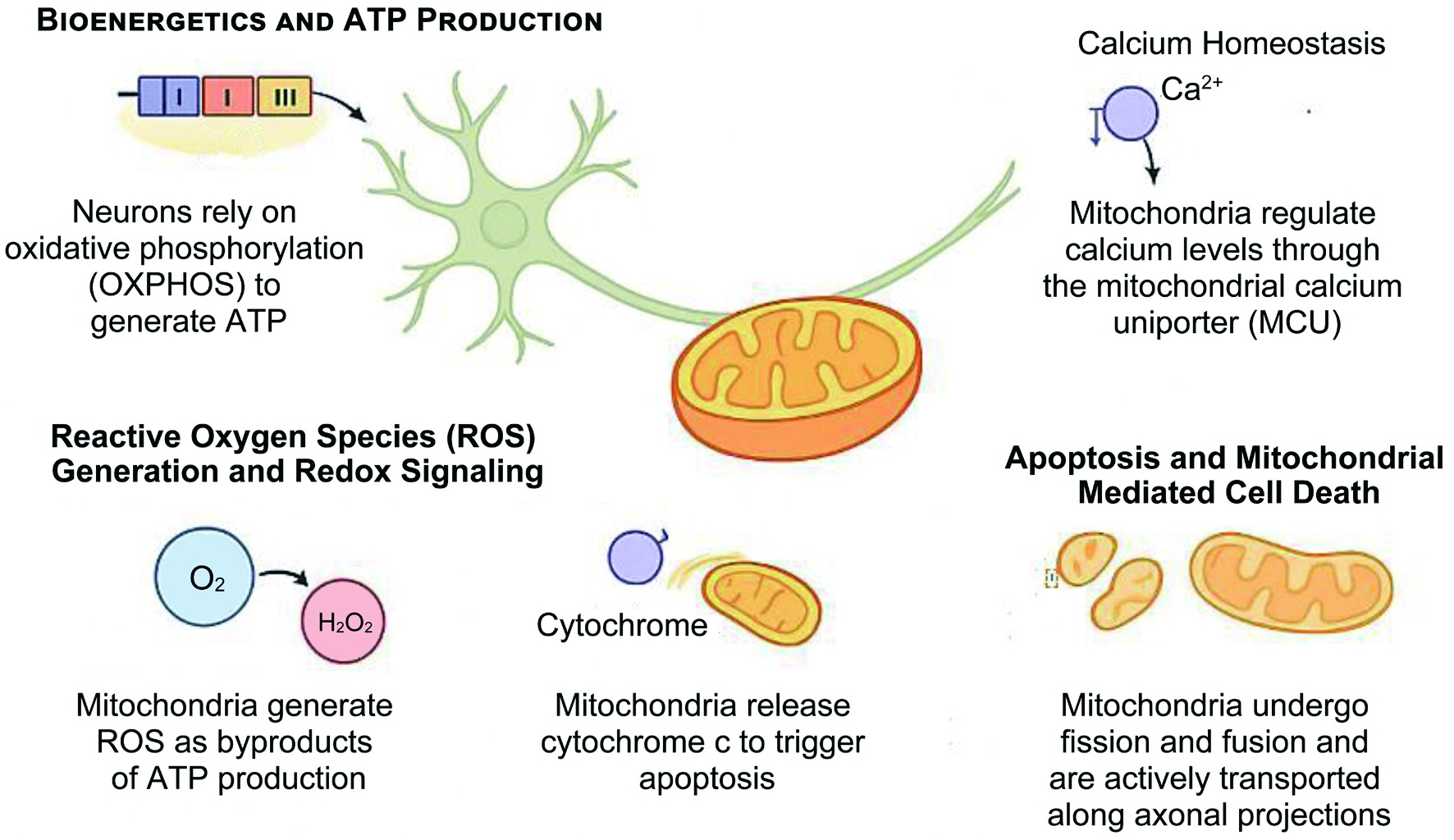
Mitochondrial dysfunction is a central driver of neurodegeneration in Parkinson’s disease (PD) and Huntington’s disease (HD). This review synthesizes evidence on the convergence of genetic mutations and environmental toxicants on mito chondrial pathways to promote pathology and critically evaluates emerging mitochondria-targeted therapies. We highlight the impact of mutations in PINK1, PRKN, LRRK2, GBA, and HTT, alongside exposures to agents such as rotenone, paraquat, MPTP, heavy metals, and solvents, in disrupting mitochondrial integrity. Key mechanisms include impaired oxidative phosphorylation, calcium dysregulation, reactive oxygen species accumulation, defective mitophagy, and altered fission–fusion dynamics. We further emphasize the synergistic interplay between genetic vulnerability and environmental insults, positioning the mitochondrial interactome as a unifying framework for understanding PD and HD pathogenesis. We assess therapeutic strategies, such as mitophagy enhancers, dynamin-related protein 1 inhibitors, and mitochondriatargeted antioxidants, while highlighting significant translational challenges, including poor brain penetrance and variable patient responses. Finally, we propose a precision medicine approach, leveraging patient-derived induced pluripotent stem cells, advanced imaging modalities, and multi-omics biomarker discovery to facilitate early detection and individualized interventions. By integrating mechanistic, toxicological, and therapeutic perspectives, this review underscores the pivotal role of mitochondria and identifies them as a promising target for disease-modifying therapies in PD and HD.

This work is licensed under a Creative Commons Attribution-NonCommercial-NoDerivatives 4.0 International License.
Copyright (c) 2025 Nature Cell and Science