

Keywords
Coronary artery disease
Proprotein convertase subtilisin/kexin type 9
PCSK9 inhibitors
Alirocumab
Evolocumab
How to Cite
Abstract
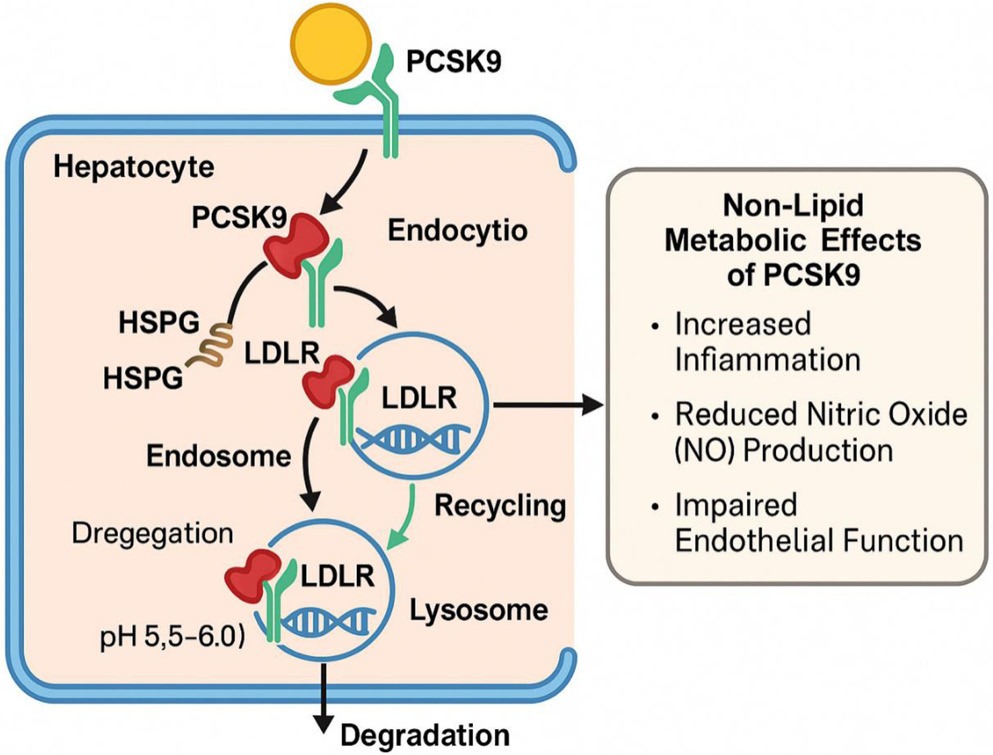
This narrative review aims to analyze the efficacy, safety, and evolving roles of proprotein convertase subtilisin/kexin type 9 (PCSK9) inhibitors in managing atherosclerotic cardiovascular disease (ASCVD), focusing on their mechanisms of action, clinical benefits, cost-effectiveness, and non-lipid effects. PCSK9 inhibitors represent a groundbreaking advancement in treating ASCVD, particularly coronary artery disease. Despite the widespread use of statins as the primary cholesterollowering therapy, many patients fail to achieve sufficient low-density lipoprotein (LDL) cholesterol (LDL-C) reduction, highlighting the need for additional treatment options. PCSK9 inhibitors, including alirocumab and evolocumab, significantly reduce LDL-C levels by nearly 60%, even in patients on tolerated doses of statins. This substantial LDL-C reduction is associated with a significant decrease in ASCVD events such as stroke, myocardial infarction, and cardiovascular death. The mechanism of action involves preventing the degradation of LDL receptors, thereby enhancing LDL clearance from the bloodstream. Beyond their potent lipid-lowering effects, PCSK9 inhibitors offer additional cardiovascular benefits, in cluding reduced inflammation, improved endothelial function, and stabilization of atherosclerotic plaques, factors that collectively contribute to lowering the risk of cardiovascular events. Clinical trials have consistently demonstrated the safety and efficacy of PCSK9 inhibitors, with common adverse effects being mild injection-site reactions and no significant impact on neurocognitive function, even at very low LDL-C levels. However, the relatively high cost of PCSK9 inhibitors presents a significant barrier to their widespread adoption, limiting their cost-effectiveness, especially in patients at lower risk of cardiovascular events. Emerging research also suggests potential roles for PCSK9 inhibitors in treating conditions beyond dyslipidemia, such as nephrotic syndrome and septic shock.

This work is licensed under a Creative Commons Attribution-NonCommercial-NoDerivatives 4.0 International License.
Copyright (c) 2025 Nature Cell and Science