

Keywords
nanotherapeutics
liposomes
nanoparticles
regenerative therapies
intracellular signaling pathways
wound healing
tissue regeneration
How to Cite
Abstract
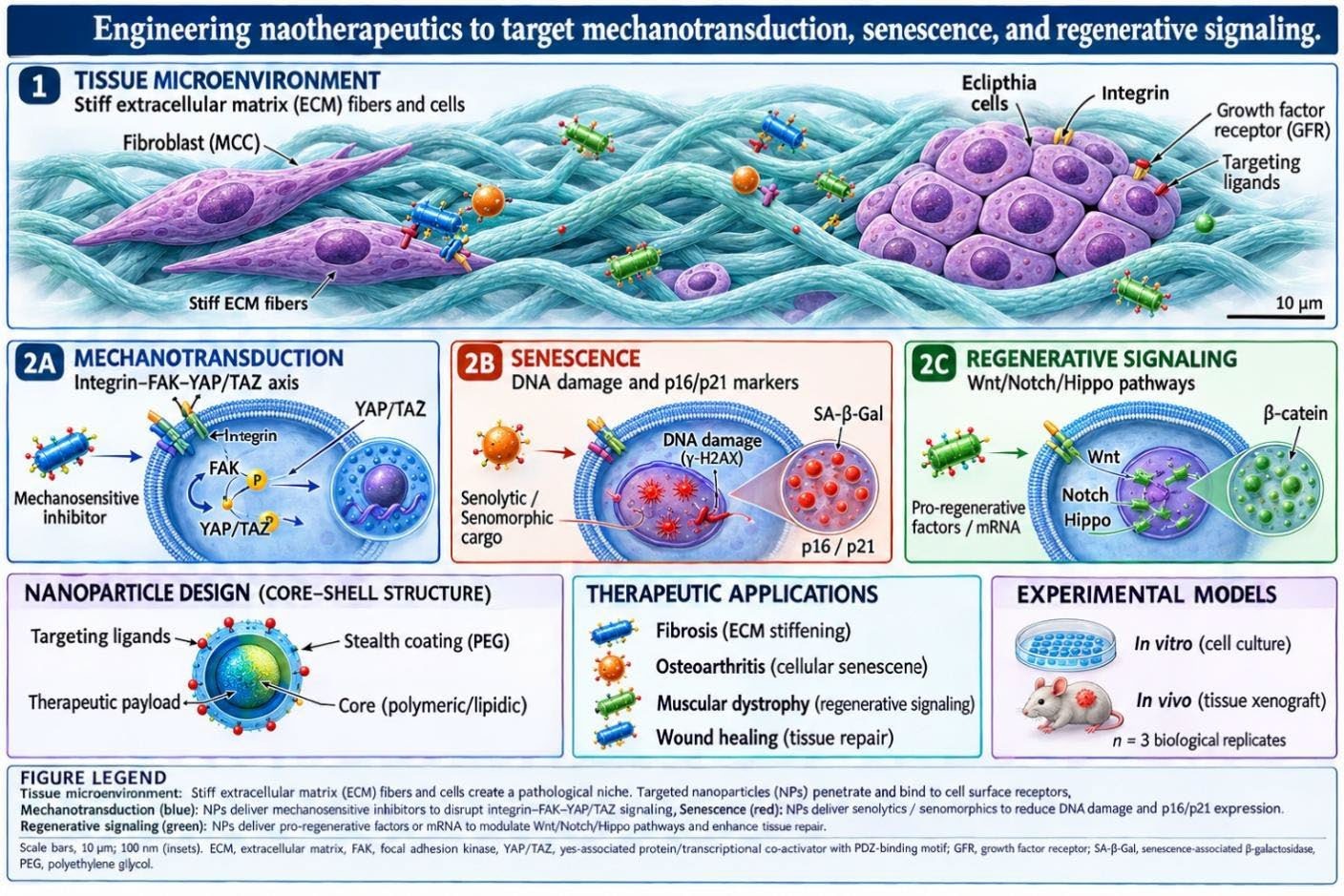
The complex nature of wound healing is influenced by a variety of factors such as mechanotransduction, inflammation, cellular senescence, remodeling of the extracellular matrix, and signaling in regenerative mechanisms. Disruption in mech- anotransduction ca n alter the cellular activities, gene expression, and tissue architecture and can lead to chronic non - healing wounds due to a range of issues. Nanotechnology has made it possible to resolve these issues through a better understanding of the processes invol ved. By using different types of nanocarriers such as liposomes, polymeric nanopar- ticles, and multifunctional nanostructures, it is possible to deliver drugs efficiently and in a way that would prevent them from destruction in the wound environment. The fu nctional nanoparticles and nanozymes are able to produce their antimi- crobial, antibiofilm, and antioxidant effect which creates comfortable conditions for the processes taking place in tissues. New innovations in nanomedicine take into account issues of th e cellular aging and inflammatory processes while ensuring that they do not influence healthy cells. Multifunctional platforms also contribute to the modulation of signaling of growth factors, transcriptional activity, and calcium - dependent pathways involv ed in rejuvenation. Immunomodulatory nanothera- pies may support the polarization of macrophages to pro - reparative phenotypes and regulate the activity of neutrophils, while smart systems with the ability to sense pathological biomarkers may enable adaptive treatment of wounds. In total, these methods contribute to the comprehensive regulation of the mechanical, inflammatory, and regenerative aspects of wound healing. Nevertheless, strict preclinical and clinical evaluation of different types of wounds is nec essary before establishing their safety, effectiveness, and possibility of practical application.

This work is licensed under a Creative Commons Attribution-NonCommercial-NoDerivatives 4.0 International License.
Copyright (c) 2026 Nature Cell and Science