

Keywords
Hepatocellular carcinoma
Apoptosis
Multidrug resistance
Tumor microenvironment
Clinical translation
How to Cite
Abstract
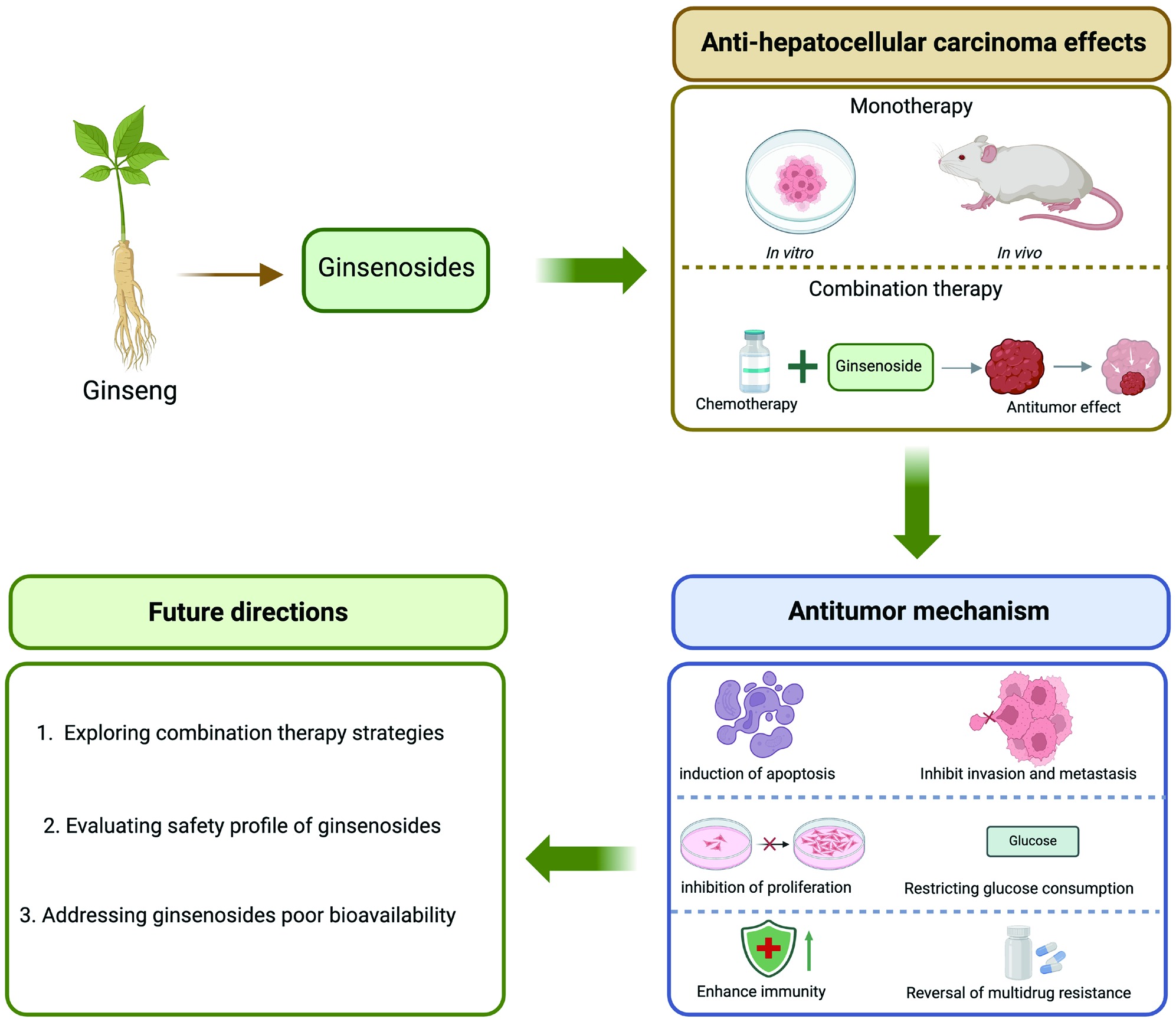
Hepatocellular carcinoma (HCC) is a leading cause of cancer-related mortality worldwide, with limited therapeutic options and poor prognosis. Ginsenosides, the bioactive constituents of Panax ginseng, have emerged as promising antiHCC agents due to their multi-targeted mechanisms. This review comprehensively summarizes the anti-HCC effects of ginsenosides, including induction of apoptosis; inhibition of invasion and metastasis; inhibition of proliferation; restricting glucose consumption; reversal of multidrug resistance; and enhancement of host immunity. Key findings highlight the role of ginsenosides such as Rg3, Rh2, and compound K in regulating critical signaling pathways (e.g., PI3K/AKT, MAPK, and AMPK), oxidative stress, and immune responses. Additionally, ginsenosides exhibit synergistic effects when combined with conventional therapies, improving efficacy and overcoming drug resistance. Despite these advances, further research is needed to elucidate the precise molecular targets and optimize clinical applications. This review underscores the potential of ginsenosides as adjunctive or alternative therapies for HCC, providing a foundation for future translational studies.

This work is licensed under a Creative Commons Attribution-NonCommercial-NoDerivatives 4.0 International License.
Copyright (c) 2025 Nature Cell and Science