
Keywords
Clinical scoring trial
Hair productivity
Male and female patterned hair loss
Scalp coverage
How to Cite
Abstract
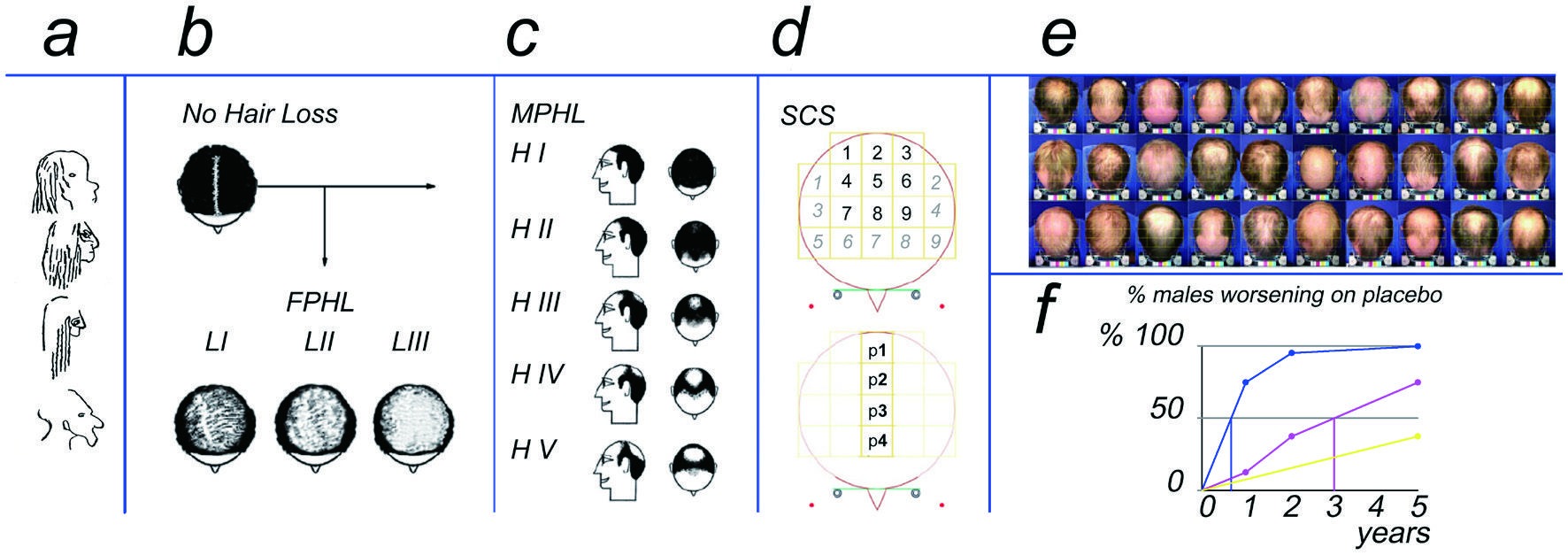
Background and objectives: Inadequate hair replacement in specific scalp regions leads to clinical patterns but cartoons do not match clinical realities. As Scalp Coverage Scoring (SCS) correlated with hair productivity, we tested ways to transfer SCS competence. Methods: Standardized images (41 × 36 cm, 72 DPI; 10 patients with thinning hair but no scarring (5 male, 5 female) served as the test set. The top view led to statistics from 880 field examinations along the midline parting by the principal investigator (PI; n = 320) and by 14 trained observers (4 non-clinicians and 10 dermatologists; n = 560). Scores reflected the ease or difficulty of seeing scalp skin through the mass of hair and that the averages from the principal investigator were correlated with those from trained observers (r = 0.975). Results: Trained observers successfully translated subjective impressions into calibrated scores reflecting a continuum of reduced hair productivity. Conclusion: To our knowledge, this new Scalp Coverage Scoring (SCS) method and our previously published Hair Mass Index (HMI) abacus are the first calibrated scoring methods used in clinical dermatology. SCS, combined with measure ments of hair productivity, could pave the way for future research in artificial intelligence and deep learning, utilizing known calibrated-test-images and standardized labeling.

This work is licensed under a Creative Commons Attribution-NonCommercial-NoDerivatives 4.0 International License.
Copyright (c) 2024 Nature Cell and Science