

Keywords
Micropulse laser
Retinal pigment epithelium
Diabetic macular edema
Central serous chorioretinopathy
Age-related macular degeneration
Navigated laser
Nanosecond laser
Retinal imaging
Non- damaging retinal therapy
How to Cite
Abstract
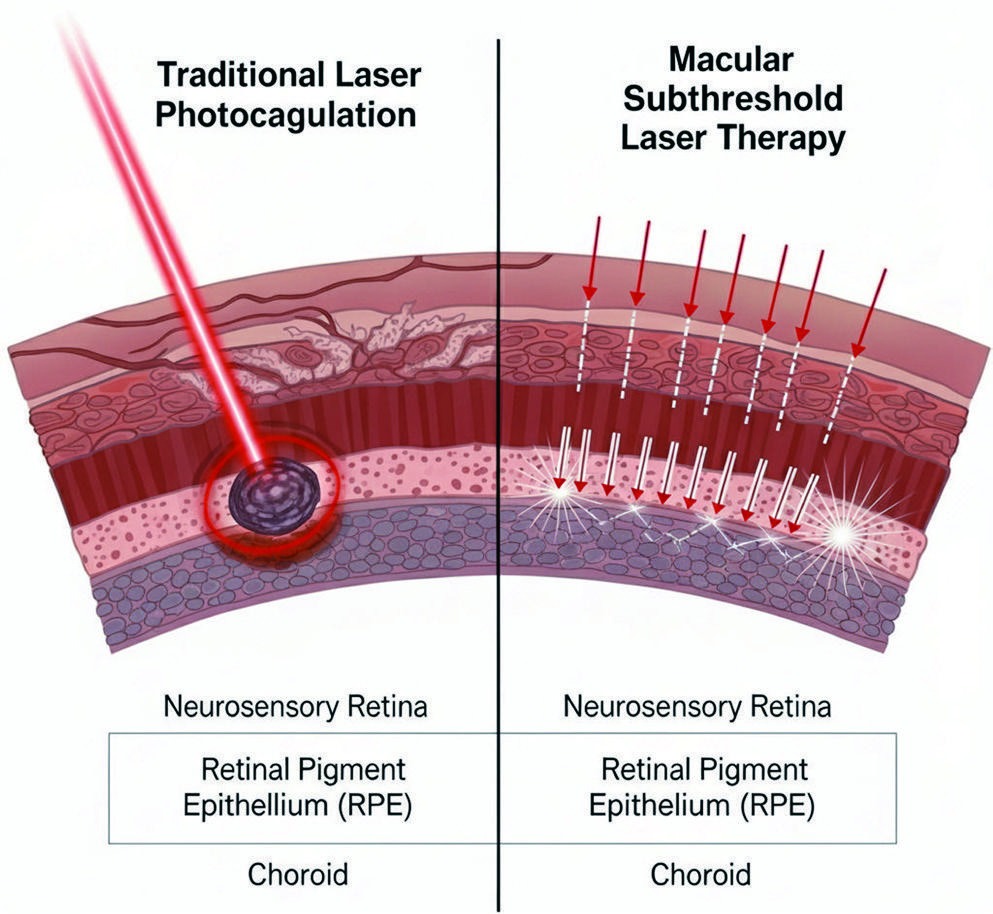
Macular subthreshold laser therapy has emerged as a safe and tissue-sparing alternative to conventional photocoagula tion for various macular diseases. Modulating retinal pigment epithelium function and cellular stress responses provides therapeutic benefit without inducing visible retinal burns or structural damage. Evidence is strongest for diabetic macular edema and chronic central serous chorioretinopathy, where it achieves anatomical and functional outcomes comparable to those of conventional laser therapy while preserving retinal sensitivity. Its role in age-related macular degeneration and other retinal conditions remains investigational, with mixed results. The advantages of subthreshold laser include repeatability, safety in foveal treatment, cost-effectiveness, and reduced treatment burden when used in combination with pharmacological therapies. Limitations include the lack of a visible treatment endpoint, variability in protocols, and lower efficacy in advanced or refractory disease. Overall, subthreshold laser therapy is a valuable adjunct or alternative for selected macular disorders, particularly when long-term retinal preservation is desired. The objective of this review is to synthesize current evidence on the principles, mechanisms, clinical applications, efficacy, safety, and limitations of macular subthreshold laser therapy across major retinal diseases.

This work is licensed under a Creative Commons Attribution-NonCommercial-NoDerivatives 4.0 International License.
Copyright (c) 2025 Nature Cell and Science